The world of the Lands Between beckons once more, but for returning Tarnished, the journey back feels decidedly different. In a move that's ruffled more than a few spectral feathers, the developers of Elden Ring Nightreign have made a colossal pivot: this isn't your solo, melancholic pilgrimage anymore. This is a party. A party of three, to be exact, traipsing through ever-changing, procedurally generated landscapes where the only constant is the need for teamwork. And in this new, co-op focused vision for 2026, one beloved companion has been left in the stable: the trusty spectral steed, Torrent.
Remember those long, contemplative rides across the vast expanses of Limgrave or the eerie silence of Caelid, broken only by Torrent's hoofbeats? Those days are gone. Nightreign demands a different pace and a different mode of transport. Director Junya Ishizaki explained the reasoning, stating that the very structure of traversal has been overhauled. The biomes themselves vary wildly in size and design, necessitating a more dynamic and, frankly, airborne approach. So, what replaces our four-legged friend? The answer is waiting for you in the skies.
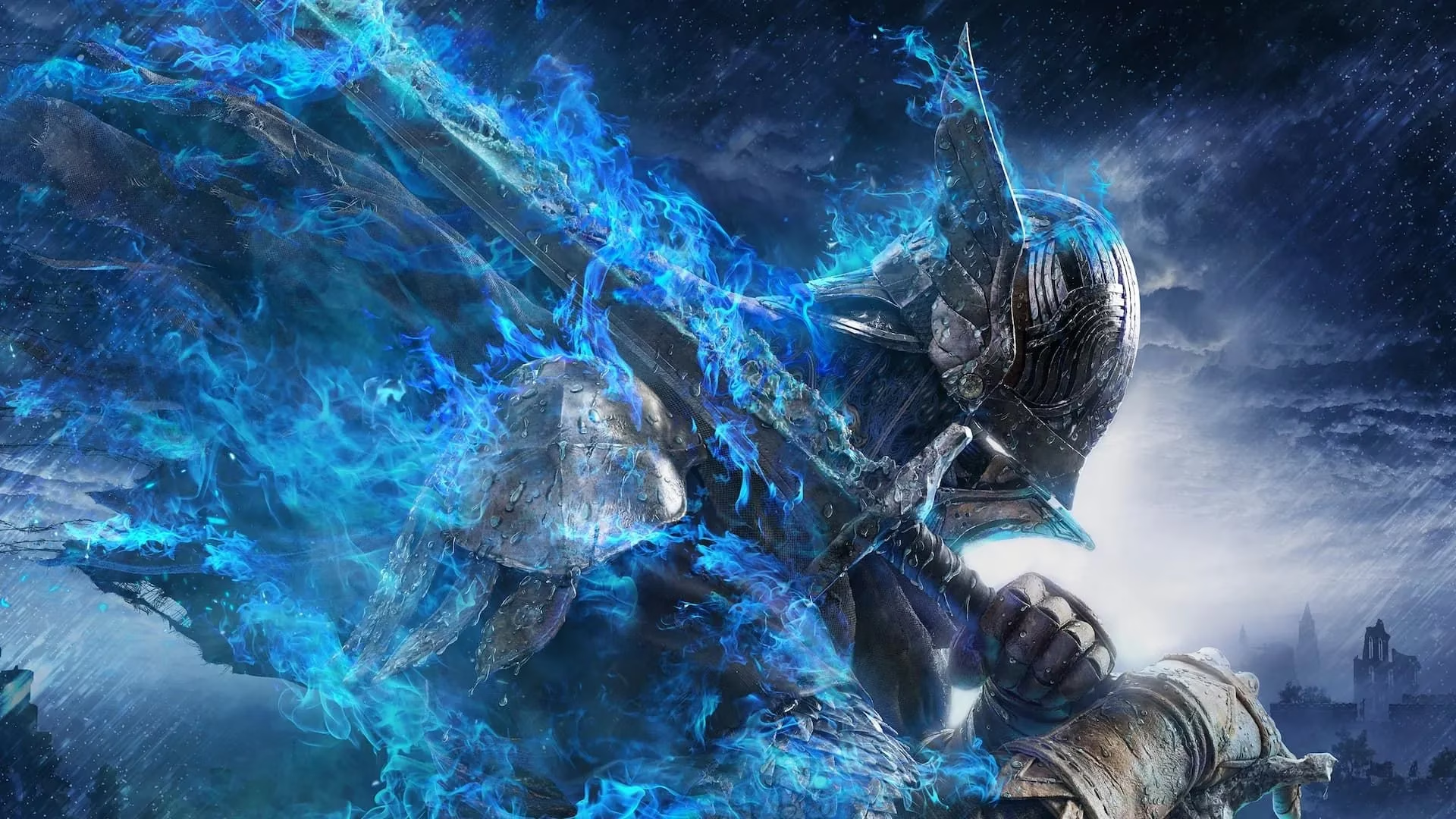
Taking Flight: The Age of the Spectral Hawk
Gone are the days of calling Torrent with a spectral whistle. In Nightreign, players become Nightfarers, and their primary mode of long-distance travel is the majestic Spectral Hawk. These aren't just cosmetic mounts; they represent a fundamental shift in how players interact with the world. Found at colossal, glowing spectral trees scattered across the map, these birds allow Nightfarers to latch onto air currents, soaring over obstacles and covering distances that would make even the most upgraded Torrent blush. Ishizaki himself boasts about the new system's speed, claiming that once players get the hang of it, zipping across the map on a Hawk feels "speedier than riding Torrent when you go back to playing Elden Ring."
But is speed everything? For many veterans, Torrent was more than transportation; he was a silent partner in a lonely world. The shift to birds, while thematically cool (who doesn't want to be a sky knight?), undeniably changes the game's feel. Can you really share a poignant, silent moment with your buddies while you're all screaming through a thermal updraft?
Why Torrent Got the Boot: A Developer's Perspective
Let's be real, the writing was on the wall. Or, more accurately, in the game design documents. Nightreign is built from the ground up for three-player co-op. The maps are procedurally generated, meaning they shift and change, promoting replayability and teamwork-based exploration. A horse, even a magical one, is designed for a single rider on a mostly static map. The developers faced a choice: awkwardly retrofit Torrent for group travel (imagine three Tarnished trying to ride one spectral pony—comedy gold, but terrible gameplay) or design a new system that embraced the core multiplayer pillar.
They chose the latter. The Spectral Hawk system is inherently more flexible for a group. Players can travel independently to different objectives, using the hawks as a fast-travel network, or coordinate a synchronized aerial assault on a target. It's a system built for strategy and coordination, not solitary reflection.
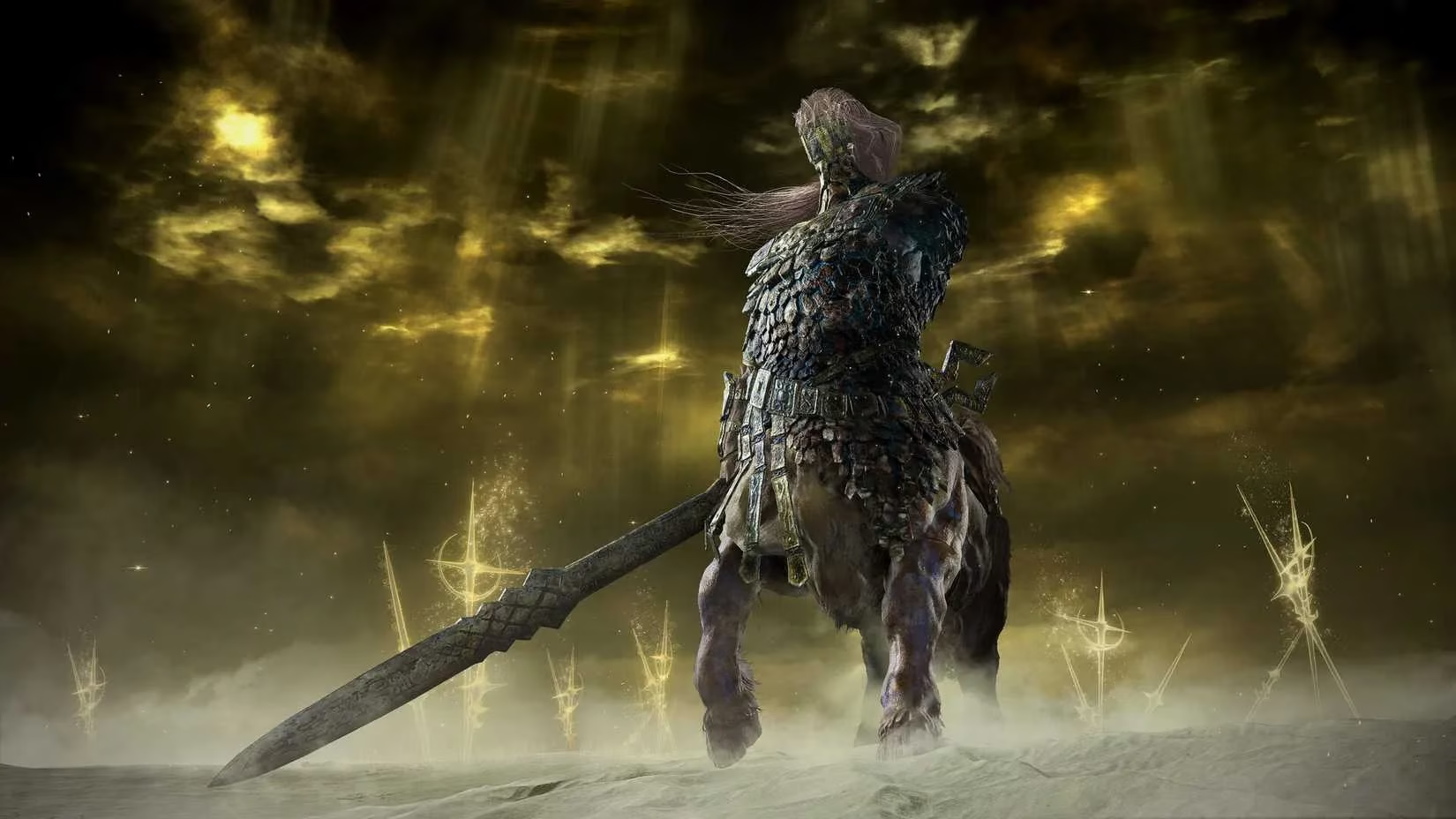
What We Gain (And What We Mourn)
So, what's in the new traversal toolkit for 2026's Nightfarer?
-
Spectral Hawks: Your long-distance, sky-high taxis. Call them at giant trees, ride the winds.
-
Revamped Sprinting & Mounting: Ishizaki teased "all sorts of new traversal techniques," suggesting ground movement has also been juiced up. Perhaps a more agile, parkour-inspired system for navigating the new, unpredictable landscapes?
-
A True Co-op Feel: This is the biggest gain. The shared experience of discovering a hidden canyon from the air with your friends promises a different, more social kind of adventure.
Yet, the ghost of Torrent lingers. His absence severs a tangible link to the original game's identity. That feeling of mounting up after a brutal fight, of having a reliable (if occasionally suicidal) companion—it's a specific kind of video game magic that Nightreign has willingly traded for a new kind of spectacle. Was it the right call? Only time, and player reception upon the game's launch, will tell.
Final Verdict: A New Dawn for the Lands Between
Elden Ring Nightreign is not Elden Ring 2. It's a bold, multiplayer-focused spinoff that isn't afraid to leave sacred cows—or spectral steeds—behind. The replacement of Torrent with Spectral Hawks is the most visible symbol of this philosophical shift. It's a move that prioritizes cooperative speed, verticality, and a fresh gameplay loop over nostalgic familiarity.
For those who cherished the lonely, atmospheric rides of the original, it's a bittersweet farewell. But for players eager to carve a new path through the Lands Between with two friends by their side, soaring on the wings of a hawk, Nightreign offers a thrilling and fundamentally different way to experience this beloved world. The message from the developers is clear: saddle up with your squad, look to the skies, and get ready for a ride. Just don't expect to pet your horse at the end of it.
| Feature | Elden Ring (Original) | Elden Ring: Nightreign (2026) |
|---|---|---|
| Core Focus | Solo Adventure | 3-Player Co-op |
| World Design | Vast, Static Open World | Procedurally Generated, Shifting Maps |
| Primary Mount | Torrent (Spectral Steed) | Spectral Hawks |
| Traversal Feel | Contemplative, Grounded | Fast, Strategic, Aerial |
| Key Vibe | Lonely Pilgrimage | Cooperative Expedition |