As a dedicated gamer who has spent countless hours in the Lands Between, I have always marveled at FromSoftware's mastery in creating unforgettable boss encounters. The thrill of overcoming a seemingly insurmountable foe is the beating heart of their design philosophy. Now, in 2026, with the imminent arrival of Elden Ring Nightreign, the studio stands at a fascinating crossroads. This spin-off isn't just another journey through a shattered world; it's a game fundamentally built from the ground up for cooperative play, a first for a major FromSoftware title. This core design shift presents both a monumental challenge and a golden opportunity. The studio's legendary boss battles, which have always been a solo player's ultimate test, must now evolve to create a truly shared, yet equally punishing, experience for every member of a three-player team.
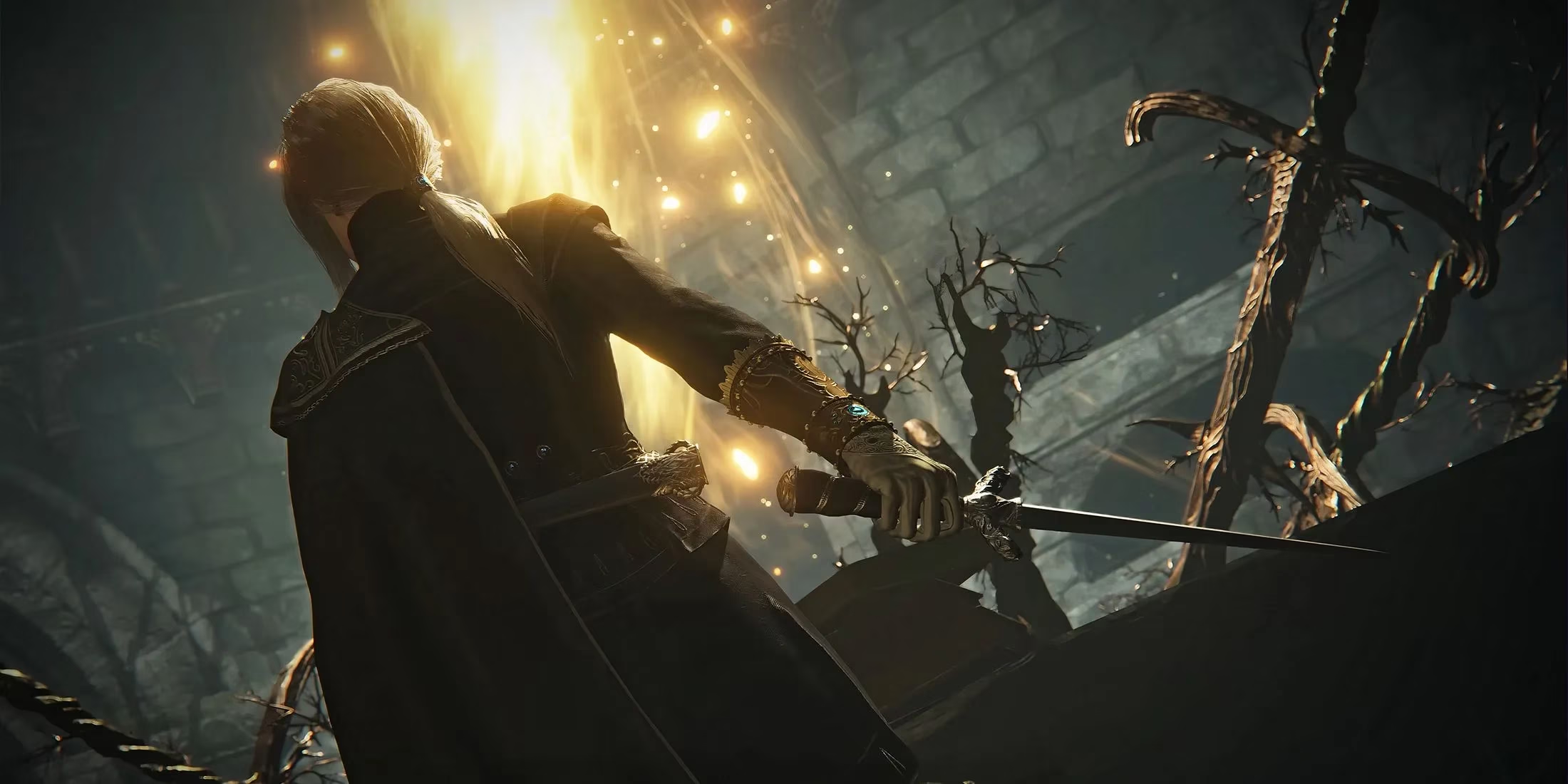
The Co-operative Paradigm Shift
Let's be clear: while summoning allies has always been a staple in FromSoftware's toolkit—a lifeline for many struggling Tarnished—Elden Ring Nightreign flips the script entirely. The base Elden Ring and its Shadow of the Erdtree expansion were designed as solo adventures with co-op as a supportive option. Nightreign, however, is engineered for a trio from the start, with solo play as the secondary path. This reversal of the fundamental rules means the old boss design playbook, where aggro could be managed or even trivialized by a single skilled player, is no longer sufficient. We've all seen it happen: a summoned legend like LetMeSoloHer could enter your world and single-handedly dismantle a boss while you watched from a safe distance. In a game built for co-op, such passive spectating must become impossible for the experience to retain its signature weight and challenge.
Learning from the Past: The Aggro Conundrum
FromSoftware has already tinkered with multi-target aggression. Shadow of the Erdtree introduced more dynamic aggro mechanics, where bosses would unpredictably switch targets, keeping everyone on their toes. Yet, this system could still feel random and, at times, unfair. For Nightreign to succeed, it needs a more intelligent, deliberate system that actively engages all three players. The goal is to ensure no one feels like a bystander in their own boss fight.
Blueprint for a True Co-op Challenge
So, how does Elden Ring Nightreign create bosses that are demanding for every player simultaneously? The answer lies in borrowing smartly from other genres and innovating on FromSoftware's own foundations.
-
The Arena-Wide Threat: AoE Onslaught
One of the most effective tools is the generous use of Area-of-Effect (AoE) attacks. This is a classic strategy from MMO raid design that Nightreign can adapt brilliantly. Imagine a colossal boss not just swinging at the player in front of it, but periodically slamming the ground to create shockwaves, summoning deadly eruptions across the entire arena, or unleashing sweeping beams that force the entire team into a synchronized dance of evasion. These mechanics prevent players from safely "healing in the back" and ensure everyone is actively participating in survival.
-
The Ingenious "Reverse" Aggro System 💡
This is where Nightreign could truly innovate. Instead of bosses focusing on the player dealing the most damage (a traditional "tank" model), imagine a system where a boss's attention is drawn to the least active combatant. The more passive a player becomes—lingering at range, not engaging, focusing solely on healing—the higher their threat level rises. This "reverse" aggro mechanic would be a game-changer. It would force a dynamic, rotating frontline where every player must periodically step into the fray to manage the boss's attention. It rewards aggression and punishes passivity, perfectly aligning with the game's co-op ethos.
-
Mechanical Interdependence
Bosses could introduce mechanics that require split-second coordination. For instance:
-
Simultaneous Strikes: A boss becomes vulnerable only when struck from three different angles within a short window.
-
Environmental Puzzles: One player might need to activate a mechanism to lower a boss's shield while the others distract it.
-
Debuff Management: A stacking debuff applied by the boss can only be cleansed by another player's specific action, encouraging constant teamwork beyond just dealing damage.
-
The Stakes for FromSoftware's Legacy
This is an unprecedented test for FromSoftware. The studio's reputation is built on curating intensely personal struggles against magnificent, terrifying foes. Translating that feeling into a shared, cooperative space without diluting the difficulty or the sense of personal accomplishment is their next great hurdle. By embracing mechanics like the "reverse" aggro system and designing bosses that treat the entire arena as a threat zone, Elden Ring Nightreign has the potential to not just adapt the Soulslike formula for co-op, but to redefine it. It can create a new genre of boss fight where victory is not just earned through individual skill, but through seamless, demanding teamwork. As we await its release, the question isn't just if the bosses will be hard—it's if they will be fair, engaging, and revolutionary for every single player in the team. The future of cooperative Soulslike experiences hangs in the balance.
For players eager to dive into the cooperative chaos of *Elden Ring Nightreign*, preparation extends beyond mastering dodge rolls and studying boss patterns. Building a well-rounded character often requires a significant investment of time, and some players may want to accelerate their journey to tackle the game's most demanding co-op encounters with a fully optimized build. In the broader gaming landscape, services that help streamline this process have become increasingly popular, allowing players to skip the grind and focus on the parts of the game they love most—whether that's perfecting their teamwork against a towering boss or exploring the world with friends.
For those looking to enhance their loadout or secure a competitive edge without the hours of repetitive farming, platforms like Lootbar offer a convenient solution for acquiring the resources you need. As the Soulslike genre continues to evolve with titles like *Nightreign*, the community around these games grows more interconnected, with tools and services that empower players to spend less time grinding and more time experiencing the thrill of coordinated boss fights. When the game finally launches, being fully prepared to take on those revolutionary multi-player encounters will be the key to enjoying every moment of the challenge.