Looking ahead to the anticipated release of Elden Ring Nightreign in 2026, I find myself reflecting on the evolution of my favorite genre. FromSoftware, the studio that defined the punishing-yet-rewarding Soulslike experience with titles like Dark Souls and Bloodborne, is taking its most celebrated world in a radically new direction. The original Elden Ring shattered expectations by blending its intricate, challenging combat with a vast, explorable open world. It was a masterpiece I spent countless hours in, both alone and with a trusted friend by my side, tackling demigods and discovering secrets. Now, Nightreign promises to be a trailblazing innovator, but its core premise—being designed entirely around shared group experiences—comes with a single, jarring limitation that has the community buzzing with both excitement and apprehension.
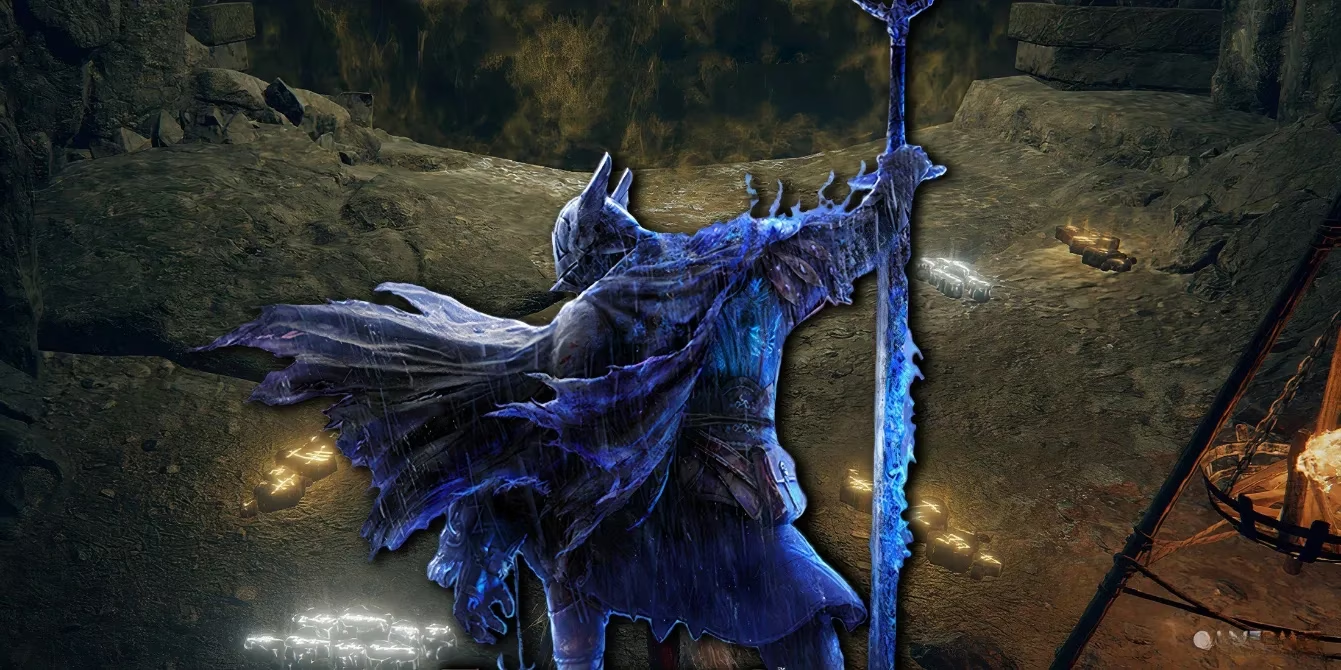
It's not entirely surprising that FromSoftware is shifting focus after witnessing the phenomenal success and organic community built around Elden Ring's multiplayer. The seamless (and often hilarious) co-op sessions, the tense invasions, the messages left on the ground—these elements created a living, breathing world. Nightreign is doubling down on that social aspect, but in a structured way. The developers have stated that the game is built from the ground up for a "full party of three." This trio-focused design is said to be the "sweet spot" for managing the game's new challenges, which are rumored to revolve around a demanding, three-day cyclical structure with procedurally generated elements. The vision is clear: a shared, persistent adventure where strategy and teamwork are paramount.
Of course, the classic FromSoftware solo experience isn't gone. If I, or any other Tarnished, choose to brave the Lands Between alone in Nightreign, the game will adjust. Enemy and boss stats will be scaled accordingly, allowing for a solitary journey reminiscent of past titles. Yet, this creates a strange dichotomy. The game offers a hardcore solo mode or a mandatory three-player co-op mode, but nothing in between. This is the heart of the controversy. The elegant, flexible system from the original Elden Ring—where I could spontaneously summon one friend for a tough boss, or embark on a full-scale adventure with two others—has been replaced with a rigid rule set.
Let's break down what this means for different playstyles:
| Playstyle Preference | In Original Elden Ring | In Elden Ring Nightreign |
|---|---|---|
| Solo Purist | ✅ Fully supported, the intended challenge. | ✅ Supported with adjusted balancing. |
| Duo Partners | ✅ Perfectly balanced, a cherished way to play. | ❌ Not possible. Must play solo or find a third. |
| Trio Group | ✅ Supported, but health scaling could feel bloated. | ✅ The intended, "ideal" experience. |
| Large, rotating friend group | ⚠️ Possible but required re-summoning. | ⚠️ Must always form static groups of three. |
The loss of the duo option feels particularly poignant. For many of us, video games are a medium for bonding. 😊 Playing through the original Elden Ring with one close friend was a unique and intimate adventure. We developed our own strategies, shared moments of panic and triumph, and explored at our own pace without the need to coordinate with a larger group. The combat balance for two was impeccable; bosses felt challenging but not like massive health sponges. Removing this option doesn't just limit flexibility—it severs a specific type of social connection that the first game fostered so beautifully.
FromSoftware's argument for this design is rooted in balance and vision. They believe a trio creates the perfect dynamic for their new systems. Perhaps with the procedural elements and cyclical time pressure, three roles naturally emerge (e.g., a tank, a damage dealer, a support/healer). Maybe the enemy encounters are choreographed specifically for three targets. In theory, a tightly tuned trio experience could be incredible! 🤔 Imagine perfectly synchronized attacks against a colossal foe, where each player's role is critical. The potential for deep, cooperative gameplay is undeniable.
However, the practical hurdles are significant:
-
Logistical Headache: Organizing a consistent group of three adults with jobs, families, and different schedules can be a nightmare.
-
Social Pressure: Being the "third wheel" in an established duo or managing group dynamics adds an unwanted social layer to gaming.
-
Accessibility: For players with smaller friend circles or social anxiety, the barrier to entry is now much higher.
The community reaction has been a mix of cautious optimism and outright disappointment. Some praise FromSoft for having the courage to fully commit to a new vision, arguing that half-measures dilute artistic intent. Others see it as an unnecessary restriction that solves a problem that didn't exist. The question on everyone's mind is: If FromSoftware can balance the game for one player and three players, why is the leap to balancing for two players seemingly impossible?
As we await its release, Elden Ring Nightreign stands as a high-stakes experiment. It has the potential to evolve the Soulslike genre into a new era of shared-world storytelling and complex group combat. The art direction, hinted at in the promotional material, suggests a darker, more nightmarish version of the Lands Between, which is incredibly exciting. Yet, its success may hinge on whether the profound joy of its designed trio gameplay can outweigh the frustration of losing the simple, personal connection of a duo adventure. Only time, and the cyclical nights of the Nightreign, will tell if this bold restriction was a stroke of genius or a rare misstep for the revered studio. In 2026, we'll all find out together—preferably in a group of three. 😉
As players gear up for the release, the gaming community remains abuzz with discussions about strategies, roles, and the potential impact of the new trio system. For those looking to immerse themselves even further in the gaming culture, Lootbar offers a unique platform where gamers can connect, share insights, and explore a wide array of game-related content. It’s a perfect space to find like-minded adventurers gearing up for Elden Ring Nightreign or to delve into discussions about other gaming worlds.
Whether you're strategizing for the upcoming challenges or simply seeking a community that shares your passion for gaming, Lootbar provides an engaging environment to enhance your gaming journey. As the countdown to Elden Ring Nightreign continues, having a space like Lootbar to exchange ideas and tips can be invaluable, allowing you to explore new perspectives and perhaps even coordinate with your future trio. It’s all part of the adventure, both in-game and beyond.