In the shadowed corridors of 2026's gaming landscape, a new challenge has been carved from stone and shadow. Elden Ring Nightreign, the audacious spin-off announced with such cryptic fanfare at The Game Awards 2024, has finally marked its calendar. The release date is set for May 30, promising to deliver a brutal fusion of FromSoftware's established legacies into a volatile new form. Helmed by the seasoned hand of Junya Ishizaki—a veteran architect of nightmares from Bloodborne and Dark Souls 3—Nightreign is not a mere expansion but a genetic splice of its predecessors. It takes the vast, haunting open world of the Lands Between and grafts onto it the lightning-fast, fluid movement of Sekiro: Shadows Die Twice. This hybrid creature is then unleashed into a roguelite arena, its heart beating with the relentless rhythm of a battle royale. Every match is a unique, three-day descent into madness, culminating in a final boss for each cycle, all while a constricting circle, like a celestial noose, tightens around the survivors.
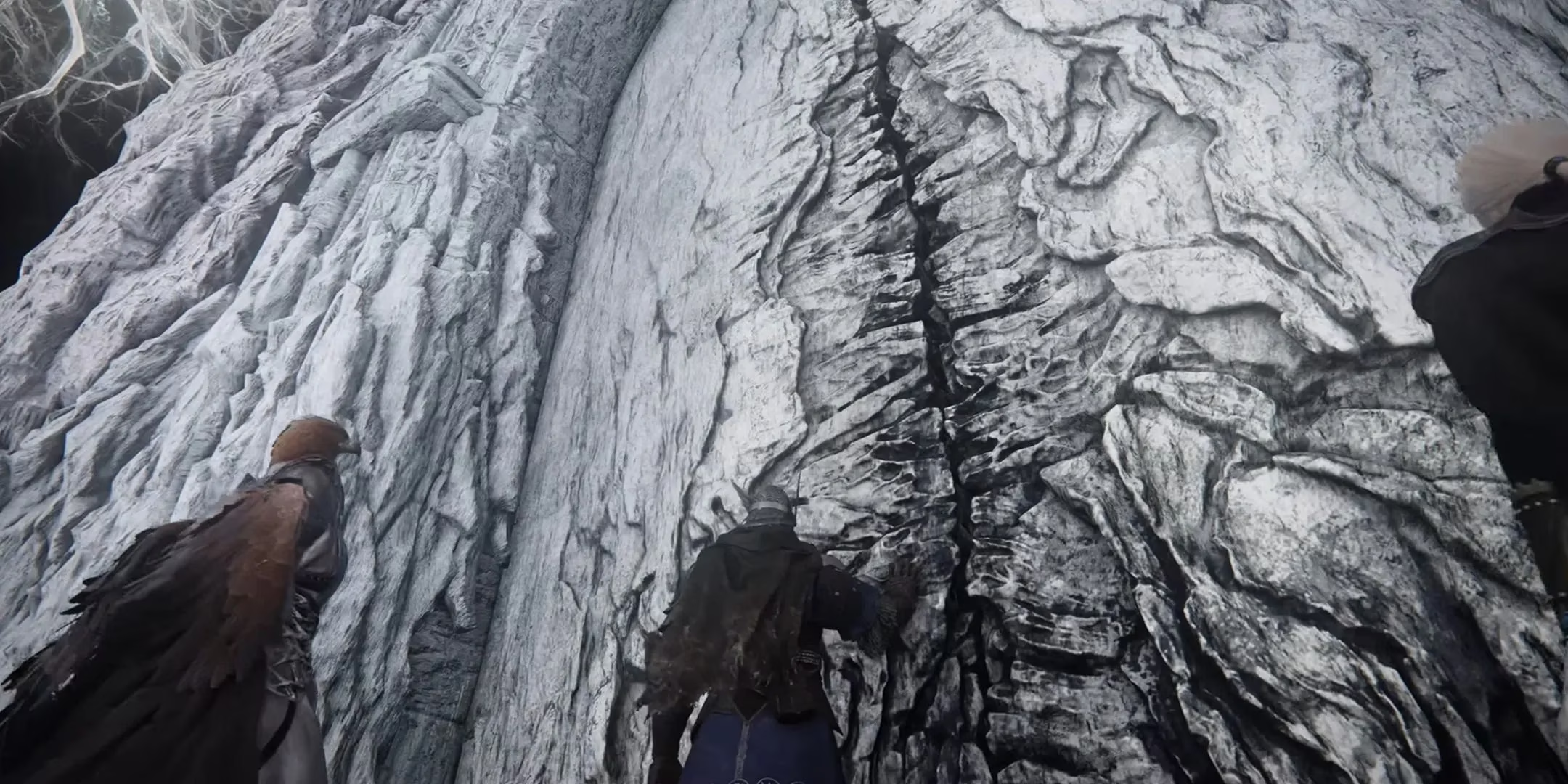
The Crucible Awaits: The Closed Network Test
The path to mastery, however, begins not in May, but in the fiery crucible of a Closed Network Test. For the chosen few granted access, the trial by fire commences in just two days, on February 14. This limited preview will unfold across several scheduled sessions over four days, offering a tantalizing taste of the chaos to come. The sessions are strictly regimented, as precise and unforgiving as a surgeon's schedule:
| Date | Session Window (GMT) |
|---|---|
| February 14 | 11:00 AM - 2:00 PM |
| 3:00 AM - 6:00 AM (Feb 15 local) | |
| February 15 | Session times to be confirmed |
| February 16 | 11:00 AM - 2:00 PM |
| 3:00 AM - 6:00 AM (Feb 17 local) |
A core tenet of the Nightreign experience is its mandatory trio dynamic. The game is designed to be conquered only in groups of three, a trinity of warriors facing the abyss. This design philosophy turns cooperation into a vital organ, as essential as a parry or a dodge roll. For those entering the network test as a duo, the system provides a lifeline: you can queue online, and the matchmaking will act as a desperate summoning ritual, pulling a third, random champion from the ether to complete your fellowship. This stranger could be your salvation or your doom, a variable as unpredictable as the shifting landscapes themselves.
A World Forged in Chaos
Imagine the Erdtree's golden light filtered through a shattered prism, its rays casting ever-shifting, malevolent shadows. That is the visual promise of Nightreign's world. Each expedition is a journey into a procedural nightmare, where familiar landmarks from the base game might appear, but twisted into new, deadly configurations. One run might begin in a storm-lashed version of Limgrave, where the skies weep acid and the sheep have grown fangs. The next could plunge you into a silent, fog-drenched Liurnia where every footstep echoes like a betrayal.
The infusion of Sekiro's movement is not merely an aesthetic choice; it redefines the very skeleton of combat. Players can expect to grapple through the air like spiders on silken threads, deflecting blows with a precision that turns defense into a razor's-edge offense, and navigating vertical spaces with a freedom previously unseen in the Elden Ring universe. This verticality, combined with the closing circle, creates a battlefield that is as much a puzzle as it is a brawl. You're not just fighting enemies; you're racing against a collapsing sky, navigating terrain that disappears behind you like a bridge of melting wax.
The roguelite structure means death has a new, grinding weight. While you may lose the progress of a specific run, persistent unlocks—new weapon arts, spirit ashes, or traversal techniques—are expected to carry over, allowing subsequent attempts to begin from a slightly stronger foothold. It's a loop designed to turn repeated failure into a slow, hard-earned ascent, each death a lesson etched into the player's muscle memory.
The Symphony of a Trio
The three-player requirement is the game's masterstroke and its greatest potential pitfall. Ishizaki's design forces a kind of desperate symbiosis. A team might consist of a classic sword-and-board knight, a glass-cannon sorcerer weaving spells like a composer directing a symphony of ruin, and a nimble rogue using Sekiro-inspired mobility to flank and distract. Success will depend on more than individual skill; it will hinge on unspoken rhythms, shared resolve, and the ability to adapt when the plan inevitably shatters like a porcelain mask dropped on stone.
The battle royale circle adds a relentless, external pressure. It transforms the environment from a backdrop into an active, hungry participant. Players might be forced into a desperate, fighting retreat through a narrow canyon, or make a last stand in a crumbling chapel as the world outside dissolves into void. This mechanic ensures that no encounter is ever truly safe, and camping is a strategy with a brutally short shelf-life. The circle is the great equalizer, the final boss that is always present, herding champions and monsters alike toward a bloody, crescendoing finale.
As of 2026, the hype surrounding Nightreign is not just about a new game; it's about the potential evolution of a genre. FromSoftware is taking its signature, meticulously crafted difficulty and throwing it into the chaotic, replayable forge of roguelites and battle royales. Will the blend be as harmonious as a perfectly tuned lute, or will it be a cacophonous clash of conflicting designs? The answers begin to unravel in the upcoming network test, a brief window where a select few will step into the night and decide if this new reign is one of glorious triumph or beautiful, collective ruin. For everyone else, the long march toward May 30 continues, a countdown measured in the slow, anxious ticks of a clockwork heart awaiting its first, brutal wound.