Following the monumental success of 2024's Shadow of the Erdtree, the Elden Ring universe is set to expand in a thrilling new direction with the recently announced Elden Ring: Nightreign. Revealed at The Game Awards, this new chapter appears to be a significant evolution for the franchise, placing a heavy emphasis on cooperative multiplayer for parties of three while fundamentally reimagining the game's approach to character progression and item acquisition. Where the original title offered a vast, static world to explore, Nightreign introduces roguelike elements and a randomized loot system that draws more inspiration from action RPGs like Path of Exile 2 than from its own progenitor.
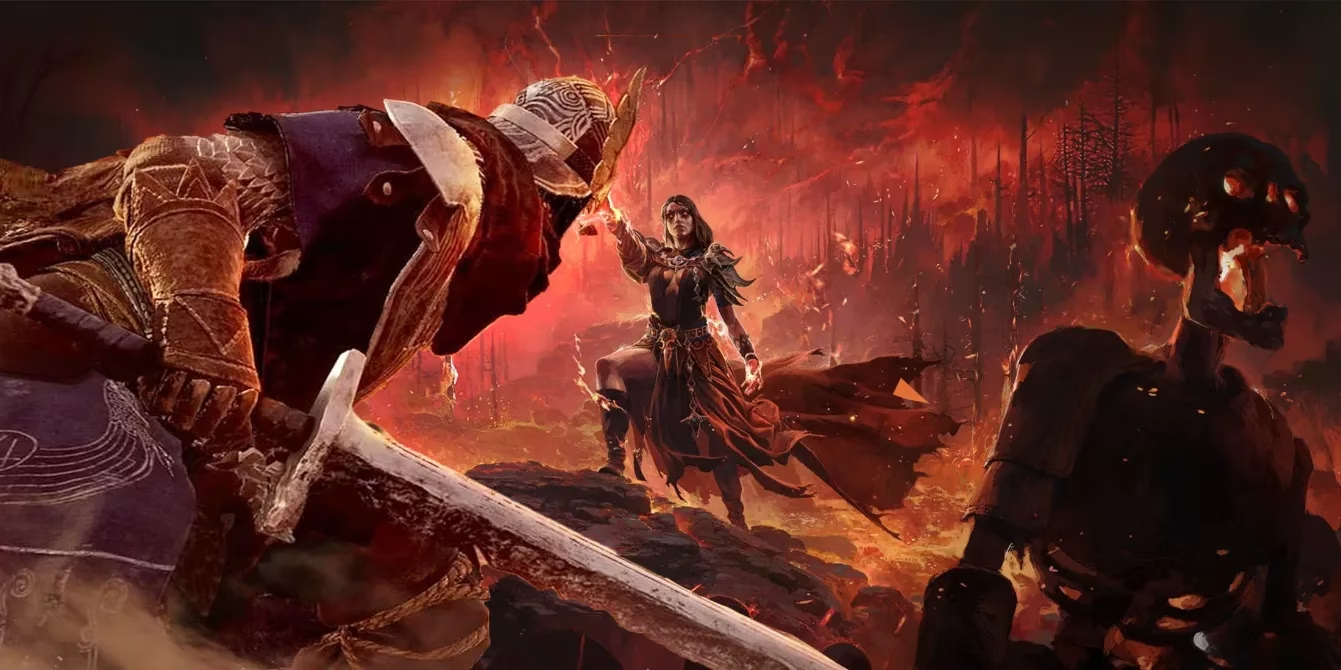
A New Foundation: Pre-made Classes and Randomized Loot
One of the core appeals of Elden Ring has always been the incredible freedom it offers in crafting unique character builds. Players could mix and match countless weapons, spells, and armor sets, with the ability to respec their attributes allowing for endless experimentation. Elden Ring: Nightreign signals a dramatic shift from this established formula. Initial information suggests players will choose from pre-made classes at the start of their journey, a stark contrast to the blank-slate Tarnished of the base game. This choice is further complicated by the introduction of a fully randomized loot system. Defeated enemies and broken objects throughout the game's world will drop gear of varying power and rarity, meaning no two playthroughs will yield the same arsenal. This combination fundamentally alters the character-building philosophy, pushing it closer to the loop of popular ARPGs.
The Roguelike Cycle and Loot Mechanics
The structure of Elden Ring: Nightreign is built around a roguelike "run" system. Players will embark on expeditions that operate on a three-day in-game cycle, facing randomized challenges and foes. The heart of this new experience is the loot system, which abandons the static, pre-placed gear locations of the original game. Instead, players will constantly discover new weapons and armor from vanquished enemies, much like in titles such as Path of Exile 2 and Diablo 4. To denote an item's value, Nightreign adopts a color-coded rarity system familiar to any ARPG veteran:
-
Common (White/Gray): Basic items with no special properties.
-
Magic (Blue): Items with one or two additional modifiers.
-
Rare (Yellow): Powerful gear with multiple synergistic modifiers.
-
Legendary (Orange): Extremely rare and potent items that can define a build.
However, FromSoftware has added a unique twist. Rather than gearing requirements being tied to class or specific attributes like Strength or Dexterity, items in Nightreign will have a character level requirement. This simplification could make loot more immediately accessible but places greater emphasis on the raw power of the modifiers found on each piece.
The Potential and Perils of Randomization
This new loot-driven paradigm is a double-edged sword, offering both exhilarating potential and notable risks.
The Positive Potential 🎯:
-
Endless Replayability: Randomized loot ensures that each three-day cycle feels fresh and unpredictable.
-
The "Eureka!" Moment: The thrill of defeating a challenging boss and seeing a legendary item drop is a cornerstone of ARPG design and is poised to be a major hook for Nightreign.
-
Build-Crafting Depth: Finding gear with modifiers that synergize perfectly—for example, a sword that causes bleed paired with armor that increases bleed damage—could create incredibly satisfying and powerful character builds on the fly.
The Risks to Avoid ⚠️:
-
Inventory Bloat: A common pitfall in loot-heavy games is the constant deluge of useless items that force players into tedious inventory management, constantly discarding or dismantling junk.
-
Carry Limit Concerns: Nightreign will reportedly limit players to carrying only six weapons at a time (three for each hand). If loot drops are too frequent, players could face frustrating scenarios where they must constantly decide which new, potentially better weapon to pick up and which to leave behind.
-
Balance and Fairness: Ensuring that randomized loot does not create overwhelmingly unfair advantages or insurmountable disadvantages between cooperative players will be a key balancing act.
The 2026 Gaming Landscape: A Perfect Counterpart
As the gaming world looks ahead to 2026, Elden Ring: Nightreign is positioning itself as a unique hybrid. It promises to retain the methodical, high-stakes combat that defines the soulslike genre while grafting onto it the addictive, loot-chasing core of a top-tier ARPG. This fusion could make it the perfect complementary experience to other major titles in the space. It aims to capture the strategic, moment-to-moment tension of a FromSoftware game and marry it with the long-term, reward-driven engagement of a game like Path of Exile 2. For fans of both genres, Nightreign represents not just an expansion of the Lands Between, but an ambitious experiment in evolving the very DNA of the soulslike RPG. Its success will hinge on FromSoftware's ability to navigate the intricacies of randomized loot, ensuring it enhances the challenging cooperative adventure rather than complicating it.