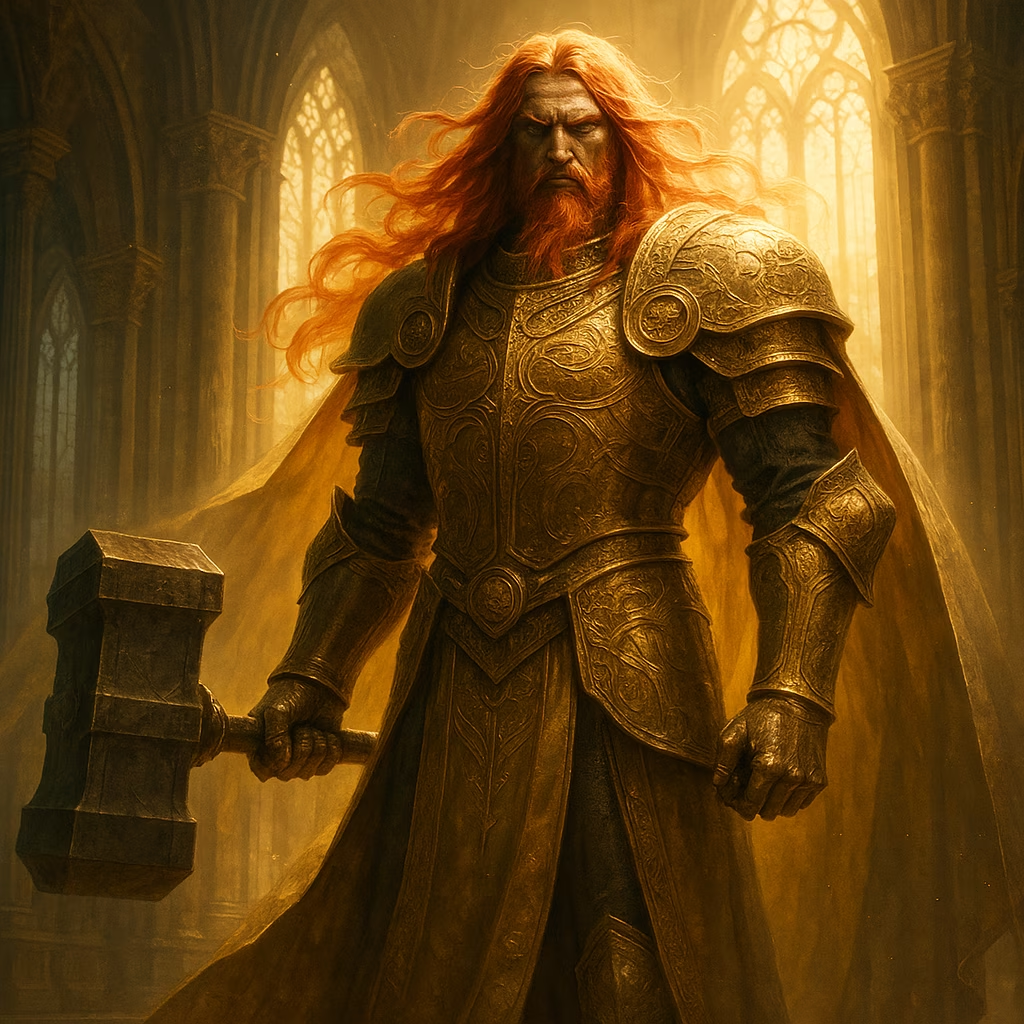
In the gaming landscape of 2026, two titanic franchises are converging on a revolutionary idea: the world itself should be a character, as unpredictable and formidable as any dragon or demigod. While they hail from vastly different worlds—one a sprawling, dark fantasy realm and the other a vibrant ecosystem of colossal beasts—Elden Ring: Nightreign and Monster Hunter Wilds are both sculpting their upcoming experiences around a central, relentless antagonist: the environment. This shared philosophy suggests a fascinating parallel in game design evolution, where the sky and the storm are no longer mere backdrops but active participants in the dance of combat and survival.
The Inclemency Engine: Monster Hunter Wilds' Living World
Monster Hunter Wilds is tearing up the series' traditional rulebook, and its crown jewel is the Inclemency system. This isn't just a pretty visual effect; it's the game's beating heart, a rhythmic cycle that dictates the flow of life in every region. The world pulses through three distinct, transformative phases:
-
🌞 Plenty: This is a period of tranquility and abundance. Skies are clear, resources are plentiful, and monsters are generally calmer, focused on grazing. Think of it as the calm before the storm, a deceptive lull that lures hunters into a false sense of security.
-
🍂 Fallow: As resources dwindle, tension mounts. Monsters become more aggressive and territorial, driven by hunger and competition. The environment itself feels barren and hostile, like a pantry suddenly locked shut.
-
⛈️ Inclemency: Here is where the system truly sings—or rather, roars. Violent weather events like thunderstorms and torrential rains sweep across the landscape. This phase transforms the hunt into a desperate struggle on two fronts:
-
Environmental Hazards: Lightning strikes can incinerate the unprepared. Terrain may flood or become treacherous.
-
Ecological Upheaval: The most dangerous creatures, the apex monsters, are drawn out by the chaos, appearing like kings summoned by the tempest's call.
-
This cyclical system ensures that no two hunts are ever the same, forcing players to adapt their strategies to the whim of the weather. The monster you track during Plenty might be a docile herbivore, but by Inclemency, it could be a rage-fueled storm-chaser.
The Relentless Threat: Elden Ring Nightreign's Unseen Adversary
While details are still shrouded in the same mystery that cloaks the Lands Between, Elden Ring: Nightreign is clearly building its co-op-centric experience around a similar pillar. Its official description promises a "relentless environmental threat" designed to make every session unique. This threat is likely more than just a cosmetic shift; it is poised to be the orchestral conductor of chaos for Nightreign's shared worlds.
Imagine venturing into a familiar area with your fellow Tarnished, only to find it transformed:
-
Altered Landscapes: A sudden, supernatural blizzard might freeze a river solid, creating a new bridge but also slowing movement and applying a frostbite status. A cataclysmic tremor could open new chasms or collapse old pathways, reshaping the battlefield in real-time.
-
Influenced Enemy Behavior: Just as in Monster Hunter Wilds, creatures of the Nightreign would react to these changes. Beasts might become frenzied and unpredictable during an acid rain storm, while spectral enemies could gain power under a blood-red eclipse. The environment wouldn't just be a stage; it would be a symbiotic partner to the enemies, enhancing their lethality.
For a series known for its deliberate, mastery-focused combat, introducing a chaotic, co-op-focused element with a dynamic environment is a bold shift. It suggests that cooperation won't just be about ganging up on a boss, but about surviving a world that is actively, intelligently hostile.
A Convergence of Design Philosophy
The parallel between these two systems is striking. Both games are moving beyond static worlds to create living, breathing ecosystems of danger. Here’s how they compare and contrast:
| Feature | Monster Hunter Wilds (Inclemency) | Elden Ring: Nightreign (Environmental Threat) |
|---|---|---|
| Core Loop | Predictable, cyclical phase system (Plenty > Fallow > Inclemency). | Suggested to be more unpredictable and session-specific. |
| Primary Focus | Ecological simulation affecting monster behavior and resource availability. | Co-op session integrity and creating unique, shared challenges. |
| Player Impact | Forces adaptation of hunting tactics and preparation. | Likely demands coordinated team strategy and on-the-fly improvisation. |
| Thematic Role | The weather as a natural, albeit intense, force of the wild. | The environment as an active, almost sentient malevolent force. |
The Future of Dynamic Worlds
What does this trend signal for the future? It shows a maturation of open-world design where immersion is achieved not just through visual fidelity, but through systemic interactivity. The environment ceases to be wallpaper and becomes a gameplay mechanic as deep as any skill tree.
For Monster Hunter veterans, the Inclemency system is like the series finally learning to breathe with the lungs of a dragon, its world alive in a way that mirrors its fantastic creatures. For Elden Ring fans, Nightreign's approach is akin to the very gravity of the world turning against the player, a fundamental law of the universe becoming an adversary. Both promise to keep players perpetually off-balance, ensuring that familiarity never breeds complacency.
In 2026, the greatest threat in a video game might not be a monster with a health bar, but the very air you breathe and the ground beneath your feet. Monster Hunter Wilds and Elden Ring: Nightreign are poised to prove that the most memorable battles are often fought not just against beasts or knights, but against the storm itself.
As these environmental systems evolve, the conversation around them will likely shift from spectacle to sustainability: how often should the world intervene, how readable should its warnings be, and how much control should players retain when the storm refuses to cooperate? Following that conversation across previews, technical breakdowns, and community testing will be part of the fun for anyone invested in systemic game design.
For players who like to keep a pulse on upcoming releases, beta windows, and price shifts while these design experiments unfold, Lootbar’s DealNest is a practical bookmark to have nearby.