As a dedicated Tarnished who has spent countless hours traversing the Lands Between, I find myself at a crossroads with the revelation of Elden Ring: Nightreign. Its bold pivot from a solitary, punishing journey to a core cooperative multiplayer experience is the most significant evolution in the Soulsborne formula to date. Announced for release in 2025, Nightreign has been in our hands for nearly a year now, and its impact on the community is clearer than ever. This isn't just a DLC or a simple expansion; it's a complete reimagining of the Elden Ring universe, built from the ground up for a party of three. But is this shift a triumphant evolution or a step too far from the roots that defined the genre?

Why the Original Elden Ring Cried Out for True Co-Op
Let's be honest: the co-op in the original Elden Ring was, frankly, a convoluted band-aid. We all remember the ritual: finding a summoning pool, using a Furcalling Finger Remedy, hoping a friendly phantom appeared, and then praying a hostile invader didn't ruin the session. The system relied too heavily on players doing the heavy lifting just to find help. The core game was never designed with seamless teamwork at its heart, leaving many players stranded in its vast, intimidating world.
Think about the major pain points:
-
Restricted Exploration: Co-op was confined to tiny bubbles around bosses or specific areas. Want to freely explore the breathtaking vistas of Liurnia with a friend? Impossible.
-
Brutal Penalties: Summon a helper, and you'd face invasions, have your healing flasks halved, and lose access to your trusty steed, Torrent, and Spirit Ashes.
-
Quest Confusion: Navigating the enigmatic NPC storylines alone was challenging enough; trying to coordinate them with another player was a nightmare.
Nightreign directly targets these frustrations. The promise of openly exploring maps alongside your party members, tackling hordes of enemies as a unit, and discovering secrets together was a dream for many. It promised to lower the barrier to entry that the original game's mysterious world and punishing solo combat presented.
How Nightreign's Co-Op Aims to Redefine the Experience
So, how does Nightreign achieve this? By making cooperation the absolute core of the experience, which has led to a complete gameplay overhaul. The most immediate change is the pace. Nightreign is undeniably fast. This speed-run feel is possible due to its focus on cooperative gameplay. Hordes of enemies are meant to be cleaved through by a coordinated team, and the entire progression system has been streamlined.
Gone is the deep, sometimes overwhelming, character creation. In its place are eight distinct, pre-defined classes, each with a unique skill set. This forces strategic team composition. You're not just building a character; you're building one-third of a squad. Need a tank, a healer, and a ranged damage dealer? The class system encourages that synergy from the start.
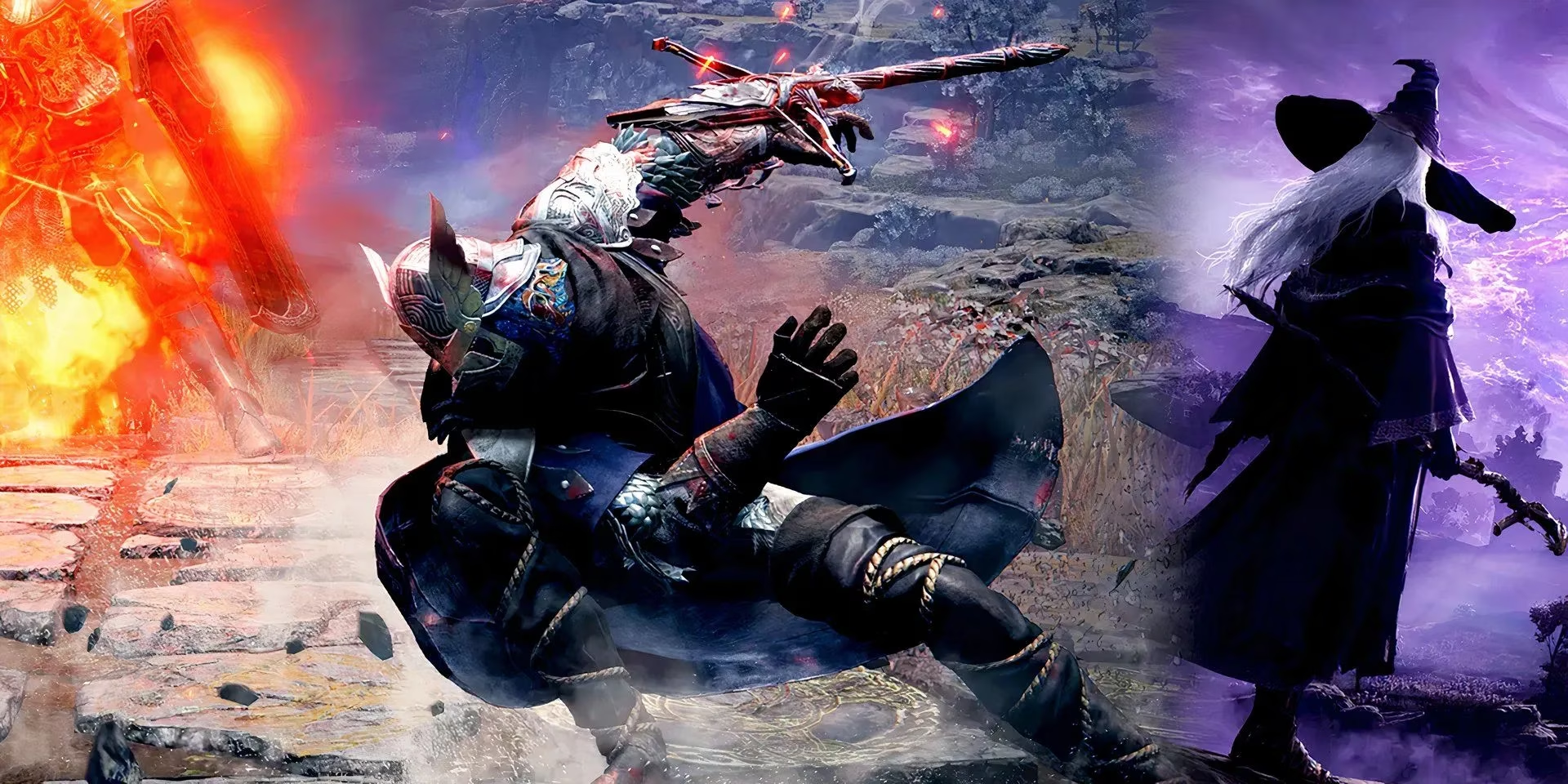
Furthermore, the narrative is now channeled through these eight core characters and the bosses you face. The elusive, easy-to-miss quests of the original are largely gone, replaced by a more directed, character-driven story. And here's a relief for many: there are no more PvP invaders to worry about in the traditional sense. While "Boss Invaders" present a new daytime threat, the anxiety of a random player ruining your co-op session is eliminated.
The Cost of Convenience: What Nightreign Leaves Behind
However, this streamlined, team-oriented approach comes at a steep cost. Nightreign solves old problems by introducing what some see as new, fundamental flaws. The very soul of the Soulsborne experience—the lonely, punishing, deeply personal journey of growth—is diluted.
The move to cooperative play means a shift to a much faster gameplay experience that intentionally sacrifices the deliberate, methodical pacing that defines the genre. The changes are, by design, divisive:
| Feature in Original Elden Ring | Change in Nightreign | Potential Impact |
|---|---|---|
| Deep Character Creation | 8 Fixed Classes | Loss of personal identity & build creativity |
| Solo, Deliberate Exploration | Mandatory 3-Player Co-Op Focus | Loss of atmospheric solitude & personal discovery |
| Complex, Hidden NPC Quests | Streamlined, Character-Driven Narrative | Loss of world mystery and environmental storytelling |
| Traditional Leveling | Overhauled/Streamlined Progression | May feel less rewarding or personalized |
| PvP Invasions | Removed (Replaced by Boss Invaders) | Loss of thrilling, unpredictable player-versus-player tension |
These are divisive changes that will likely alienate a certain percentage of players. The player who loved sneaking through dungeons, meticulously planning a solo build over 100 hours, or getting lost in the environmental lore may find Nightreign's team-based, speed-oriented loop jarring. The emphasis on pre-made groups and faster clears can make the world feel less like a place to inhabit and more like a series of combat arenas to conquer efficiently.

Verdict: A Bold Experiment with an Uncertain Legacy
Now, in 2026, having lived with Nightreign, I can see its achievements and its shortcomings clearly. It successfully created a thrilling, accessible, and socially engaging co-op action RPG set in a beloved world. The moment-to-moment combat with friends is often exhilarating. For groups of three, it delivers a consistent, high-octane experience the original could never offer.
Yet, the question remains: Does it feel like a true Elden Ring experience? For me and many veterans, the answer is nuanced. Nightreign might fix some of the biggest problem areas in Elden Ring, but these fixes come at the cost of some of the franchise's most beloved features. It traded profound, personal melancholy for shared, frantic triumph. It swapped infinite build diversity for balanced team roles. It exchanged mysterious, silent lore for a more direct character narrative.
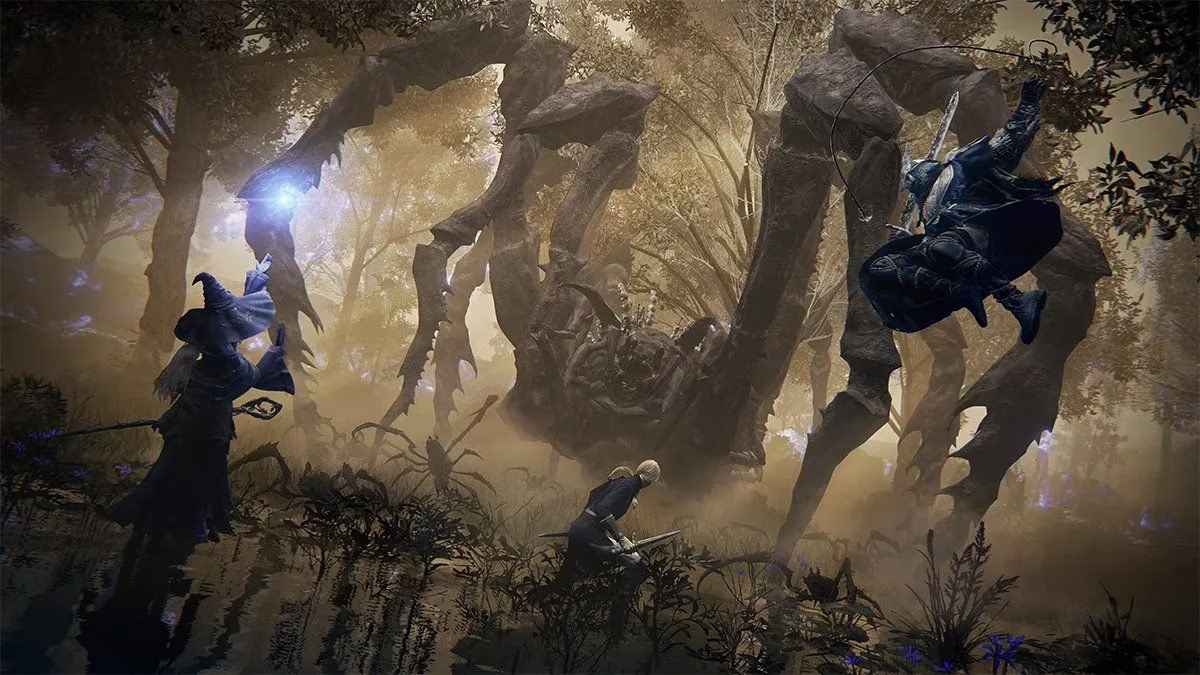
Ultimately, Nightreign is a spectacular spin-off, not a direct successor. It proves that the Lands Between can host different kinds of stories and gameplay. Its success hinges entirely on whether players value seamless, structured cooperation over the solitary, punishing, and deeply personal struggle that made the original a landmark title. It is an impressive, polished game that stands as a testament to FromSoftware's willingness to take risks. But for this Tarnished, while I enjoy the frantic nights with my allies in Nightreign, my heart still belongs to the lonely, majestic, and unforgiving daylight of the original journey. The reign of night is exciting, but does it ever truly capture the awe-inspiring, solitary dawn of the Lands Between? Only you, and your chosen allies, can decide.