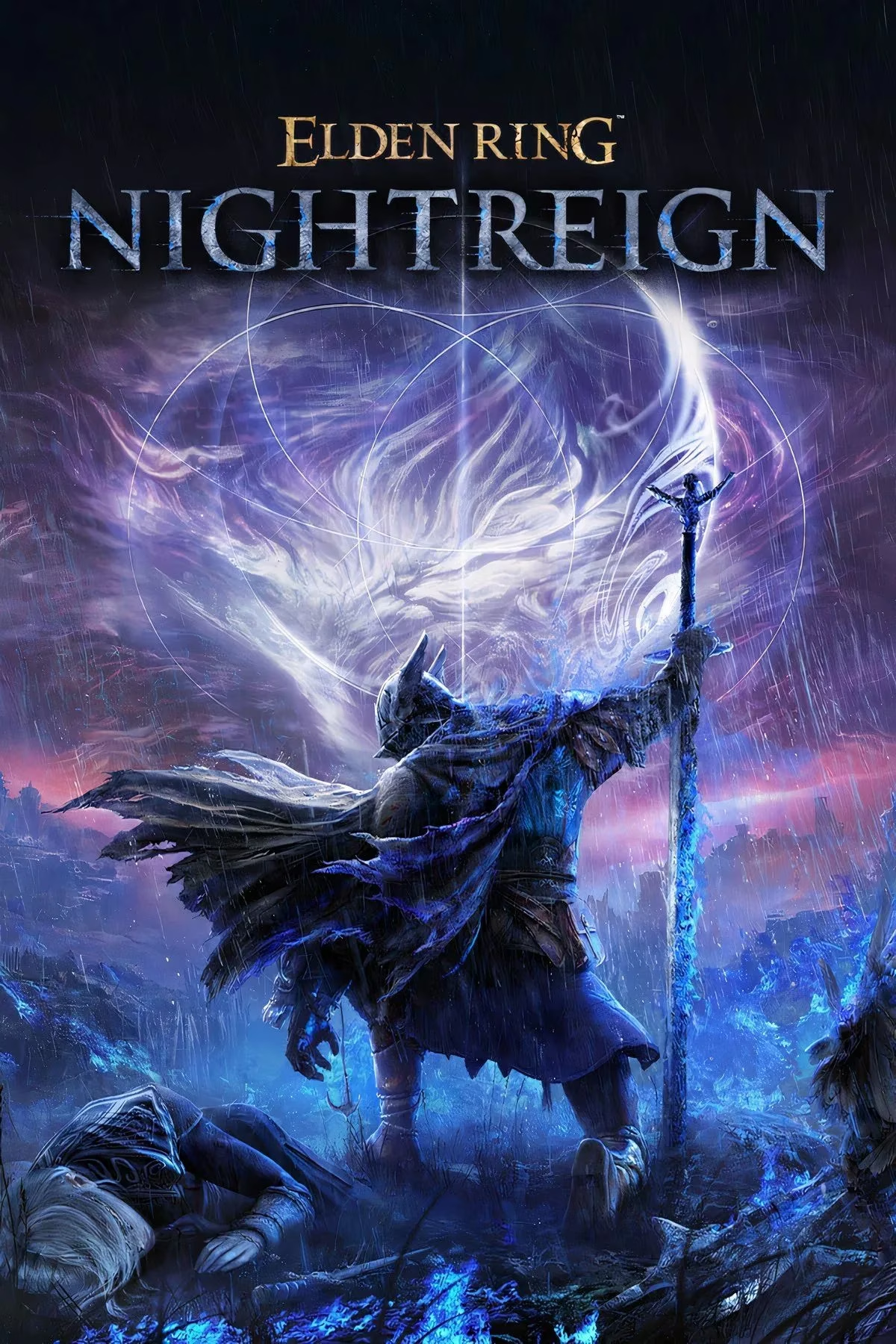
As a dedicated fan of the Lands Between, I must admit, the initial reveal of Elden Ring Nightreign back in 2024 gave me a bit of a fright. Here was our cherished, lore-drenched world being pitched as a fast-paced, co-op speed-running experience. It felt… off, you know? Like catching a glimpse of a familiar friend wearing a wild new outfit. Seeing The Nameless King from Dark Souls 3 pop up in the trailer only deepened the mystery. Were the universes colliding? Was the intricate tapestry of lore we'd spent years piecing together about to be unraveled? Well, I'm here to tell you, a year after its 2025 release, I can finally breathe easy. The game's director, Junya Ishizaki, has laid out a vision that is both ambitious and respectful. Nightreign is a standalone, parallel adventure that runs alongside the original Elden Ring story, not through it. For us lorehounds, that's a huge relief—it means our hard-earned theories about Marika, Radagon, and the Golden Order remain untouched. The Shattering wasn't just a historical event; it was a cosmic fork in the road.
A Tale of Two Realities: What 'Parallel' Really Means
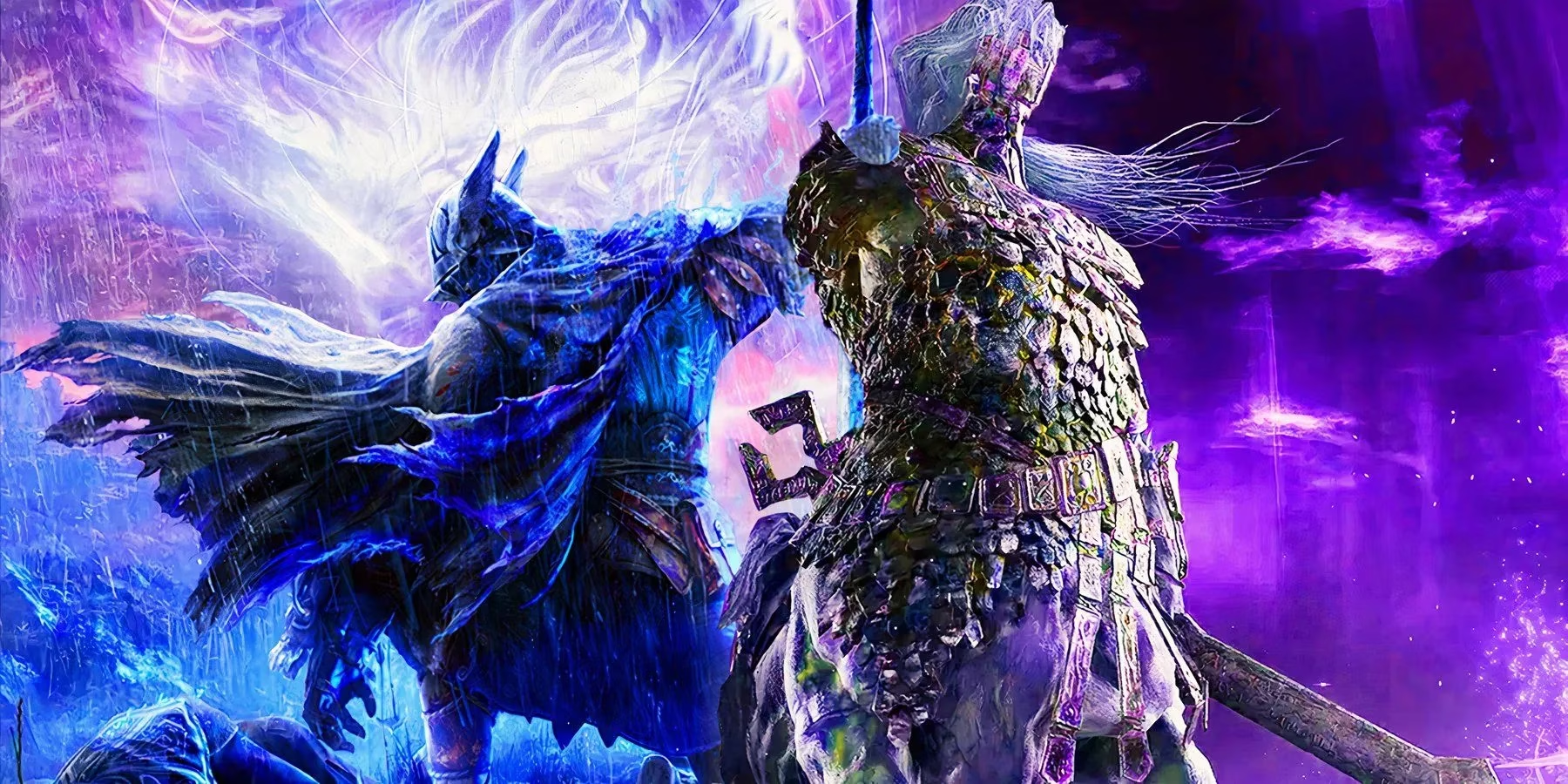
In my conversations with the community and deep dives into developer interviews, the core concept has become crystal clear. Director Ishizaki stated that Nightreign's "story is completely separate and parallel to the world of Elden Ring's." This isn't a sequel or a prequel; it's an alternate timeline. Think of The Shattering as a massive, reality-splitting event. One branch led to the somber, solo journey we experienced in Elden Ring. The other branch—well, that's where Nightreign kicks off. This means both stories are technically canon, coexisting in the same vast multiverse. They might share foundational history, like the pre-Shattering era, but from that point onward, their destinies diverge.
This parallel structure is a masterstroke. It allows Nightreign to play with familiar elements—characters, locations, concepts—without the burden of continuity. That warrior you're summoning for a co-op boss rush? They have their own history in this branch. That legacy dungeon that feels eerily familiar? It might have a completely different story here. Ishizaki was adamant that Nightreign should not "encroach" on the existing lore. So, while we might get new perspectives on ancient events, they won't rewrite the original game's history. It's a separate story built on a shared foundation. Frankly, it's a clever way to have your cake and eat it too.
Building a New Lore in the Shadows of the Old
So, if it's not changing the old lore, what is Nightreign doing? In my playthrough, I found it's busy establishing its own unique, detailed narrative. It uses the pre-Shattering era as a bedrock, but then constructs an entirely new edifice upon it. This creative freedom is palpable. Because this reality has "no basis in the lore that George R.R. Martin influenced," as per the developers, the doors are blown wide open. This explains the surprising cameos from beyond the Lands Between! It's not a retcon; it's this new branch of reality having its own rules, its own gravitational pull that can draw in icons from other FromSoftware worlds.
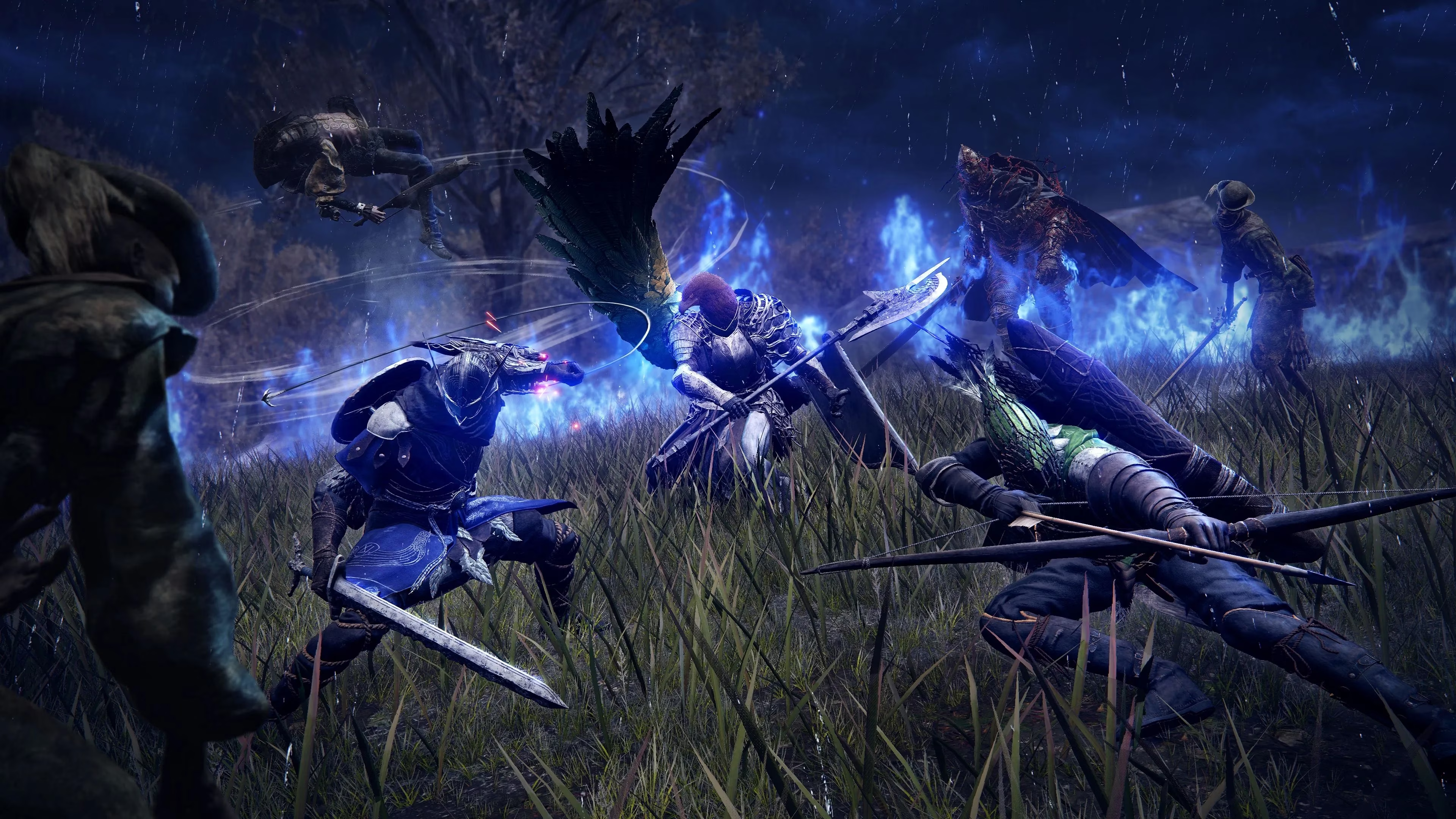
The lore here feels more immediate, often conveyed through the frantic energy of co-op play and the environmental storytelling of its new, vertically designed spaces. Characters in Nightreign do not exist in the same form in any other reality. That demigod you befriend or battle here is a unique iteration. This approach has its pros and cons, which I've broken down from my experience:
| Aspect | Elden Ring (Original) | Elden Ring Nightreign (Parallel) |
|---|---|---|
| Narrative Focus | Solo, contemplative journey to become Elden Lord. | Fast-paced, cooperative survival in a chaotic splinter-reality. |
| Lore Integration | Deep, foundational, and meticulously constructed. | Expansive, exploratory, building new myths from shared history. |
| Storytelling Pace | Slow-burn, environmental, item-based. | More direct, often tied to mission objectives and co-op banter. |
| Canon Status | The "prime" timeline branch. | A valid, coexisting alternate timeline branch. |
The Community Verdict: Love It or Leave It?
Let's be real, this branched-lore approach isn't for everyone. I've chatted with Tarnished who feel it's a missed opportunity to resolve a few of those outstanding mysteries from the original. The original lore was already a deliciously complex puzzle; adding another box of pieces can feel overwhelming. Some purists see Nightreign as a fun but non-essential distraction—a deconstruction of a masterpiece they'd rather see expanded in a more traditional way.
However, from where I'm standing in 2026, the impact has been largely positive. This new branch has brought in a new wave of players who maybe found the solo difficulty of Elden Ring too daunting. The co-op focus and roguelite elements lower the barrier to entry while still offering that signature FromSoftware challenge in bite-sized chunks. It's a different flavor, for sure. Utilizing and reinventing assets from both Dark Souls and Elden Ring is an unprecedented and exciting evolution for the studio. It shows they're not afraid to experiment, to let their iconic worlds breathe and interact in new contexts.
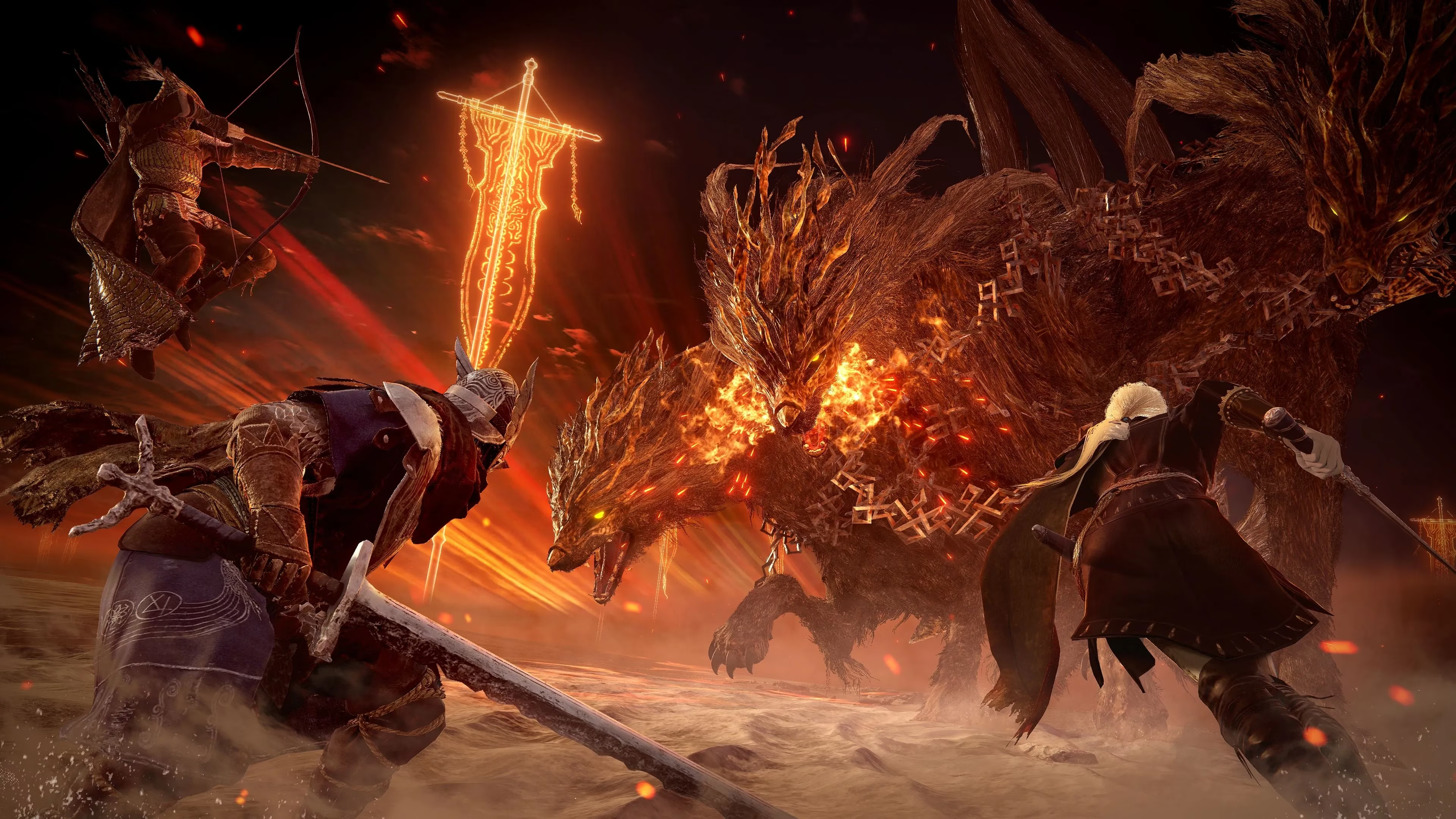
Ultimately, whether you embrace its story or just enjoy the chaotic co-op gameplay, Nightreign has carved out its own space. It has broken free from the restrictions of the main timeline to offer something fresh. It doesn't answer the old questions, but it asks fascinating new ones set against a hauntingly familiar backdrop. As a fan, I've learned to appreciate both branches for what they are: two sides of the same shattered coin, each reflecting the light in its own unique way.