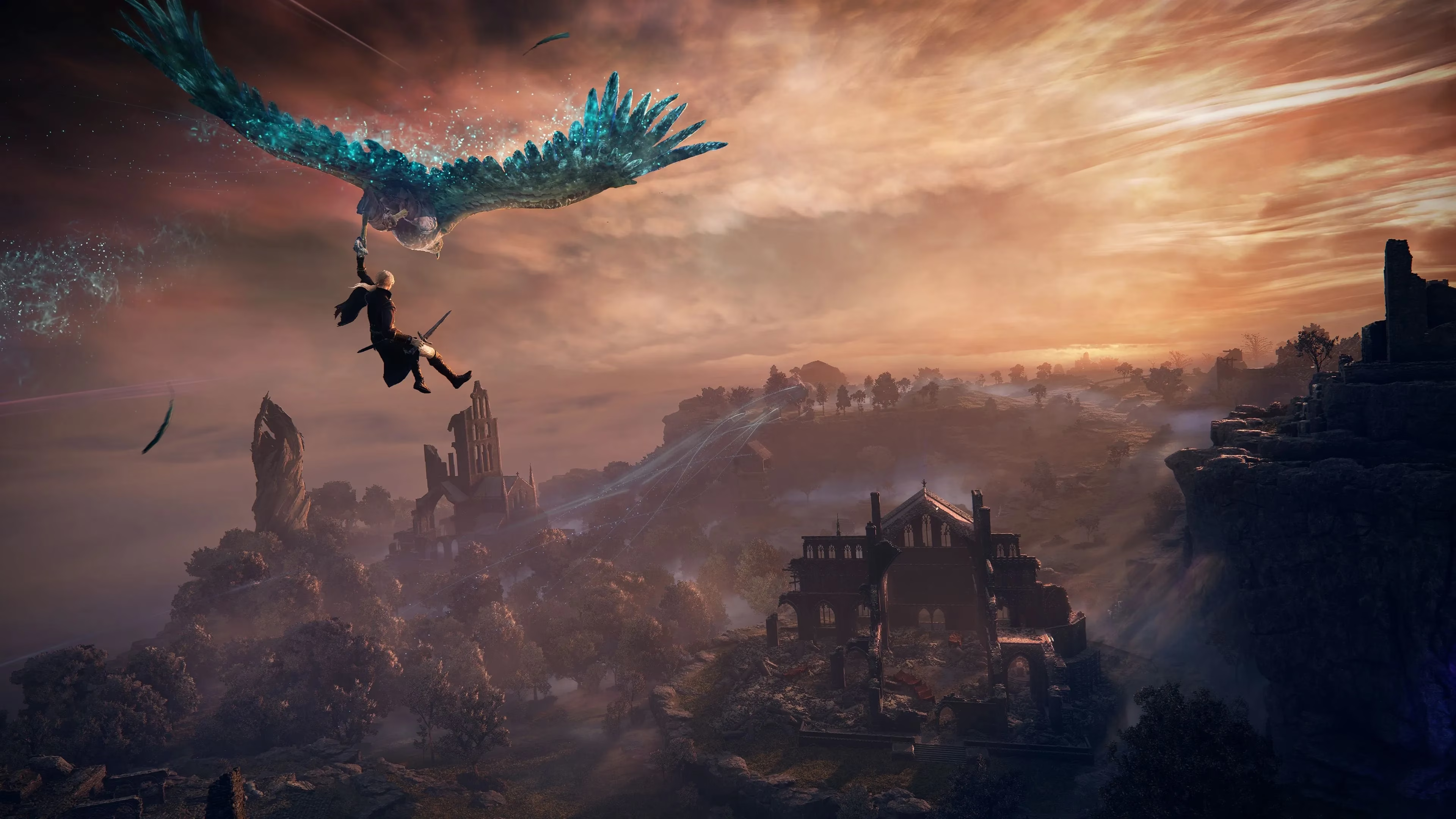
As a Tarnished who has wandered the Lands Between and linked the First Flame more times than I can count, the reveal of Elden Ring Nightreign felt like being thrown into a dream where all my past battles had bled together. It’s 2026 now, and the game has been out for nearly a year, yet the initial buzz and confusion from that first trailer still echo in the community. We were promised a new adventure following the monumental Shadow of the Erdtree, but what we got was something that defies the usual FromSoftware lorecraft—a chaotic, thrilling, and intentionally perplexing experiment.
A Soulsborne Smash Bros. 🤯
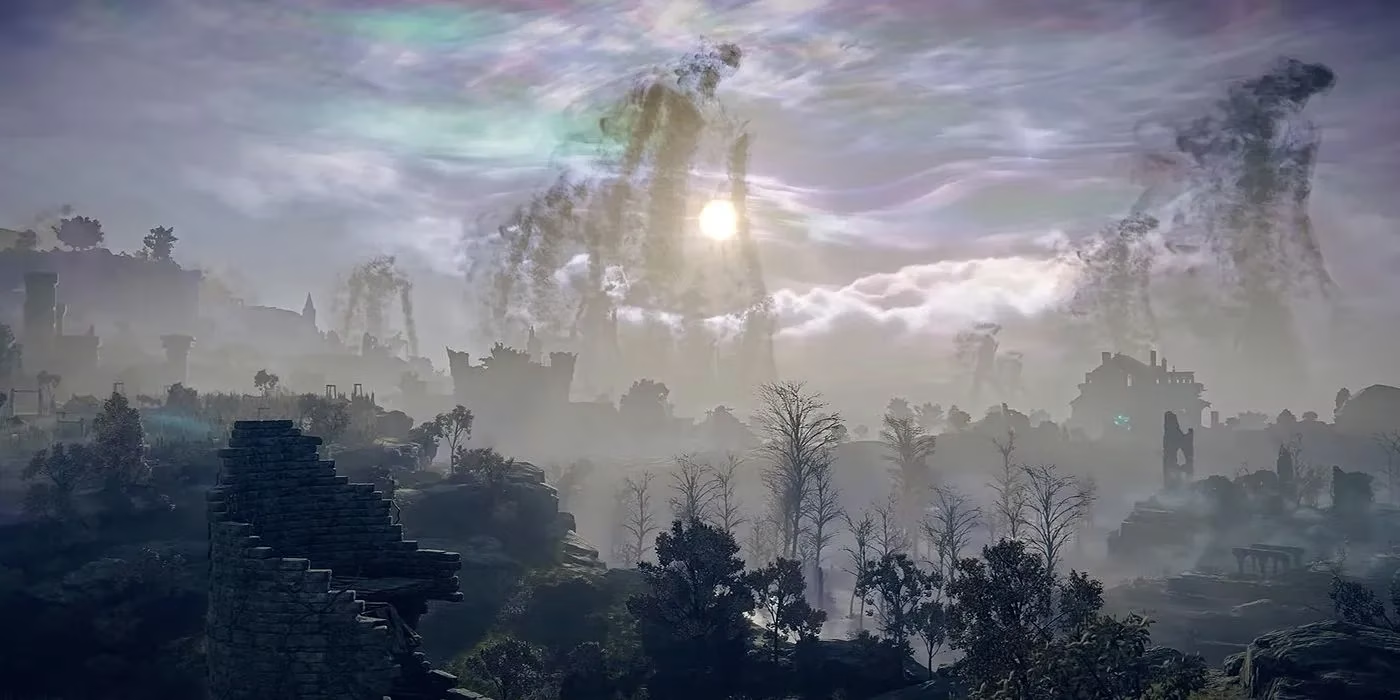
The premise is straightforward on the surface: we, the Nightfarers, must descend into the twisted realm of Limveld and survive three nights to stop the enigmatic Night Lord. But stepping into Limveld is like walking into a museum where the exhibits have broken free and started fighting each other. The lore isn't just cryptic; it's a deliberate mashup, a Super Smash Bros.-style crossover that gleefully throws established rules out the giant, Dark Souls 2 Throne of Want-inspired door.
Suddenly, I'm not just contending with the familiar, corrupted beauty of a Limgrave-gone-wrong. I'm dodging lightning spears from the Nameless King, a being who should be dust in a completely separate universe, as he rides his Storm Drake across a sky that has no business hosting him. The gentle Fire Keeper is here, her soothing voice a stark contrast to the nightmare, and the Duke's Dear Freja skitters from the shadows of Dark Souls 2. It’s as if someone took the meticulously painted worlds of FromSoftware’s history and flung them at a canvas, creating a splatter painting of epic proportions.
The Unexplainable Feast
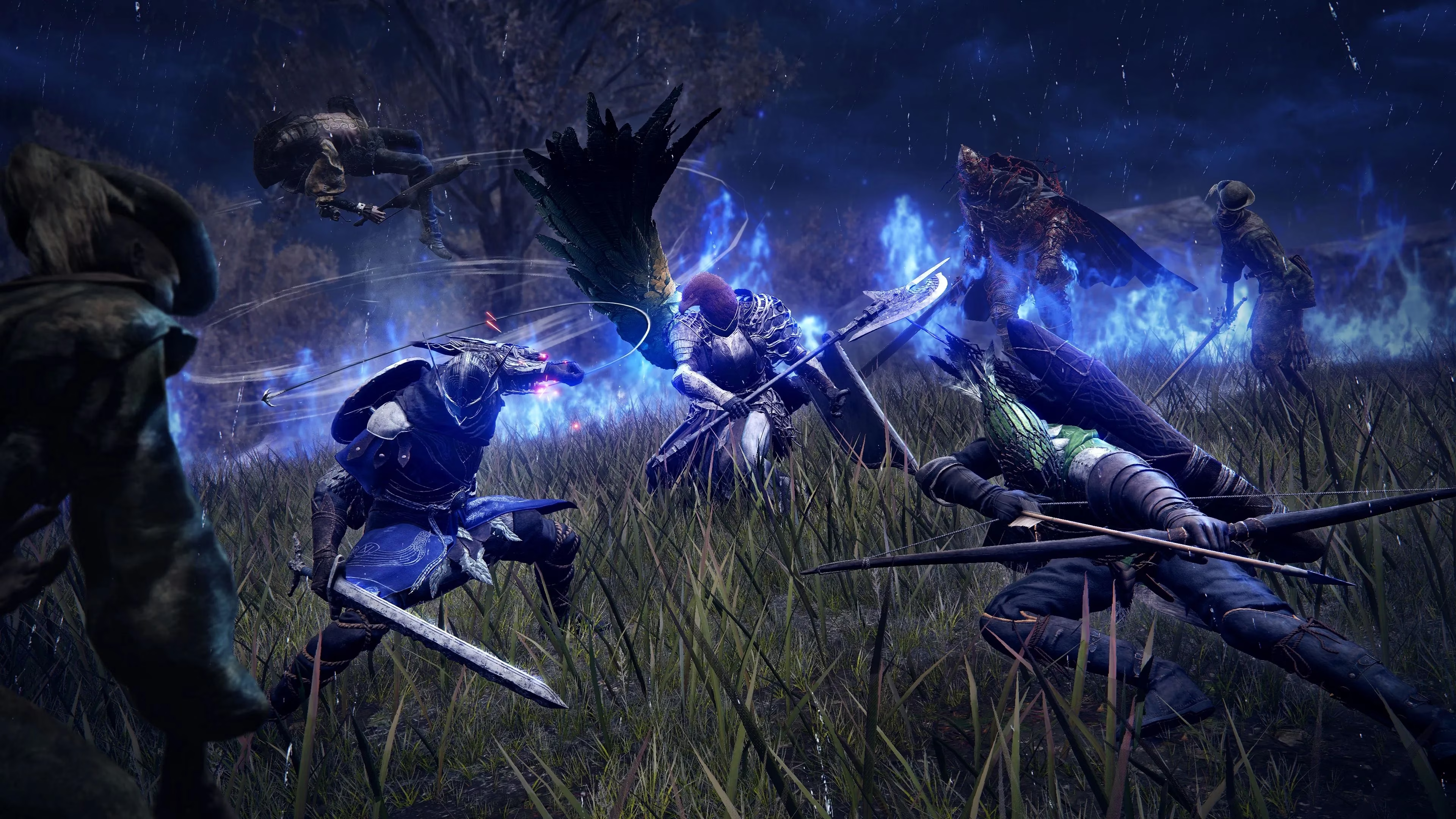
This collision of worlds has split the fanbase. The combat enthusiasts revel in the new, brutal dance of three-player co-op against these classic, remixed bosses. But for us lore scholars, it’s a feast where every dish is from a different culinary tradition, served on the same plate. Trying to find a narrative thread that connects the Nameless King, the Fire Keeper, and Elden Ring’s Margit is like trying to solve a jigsaw puzzle where the pieces are from three different boxes. The returning elements seem to just be thrown in without explanation, and I’ve come to believe that’s precisely the point.
Is Limveld a pocket dimension prison? A world where the Greater Will never arrived? Perhaps it’s a realm created from the collective memories—or nightmares—of all the Chosen Undead and Tarnished. The game offers whispers, not answers. The Centipede Demon from Lordran returns, mutated for group combat, and its presence is no more explained than a ghost suddenly appearing in a history book. The lore of Nightreign is less a tapestry to unravel and more a kaleidoscope; beautiful and complex in the moment, but its patterns are meant to shift and dazzle, not to hold a permanent, logical form.
The Freedom of a Parallel World 🗺️
The key to understanding Nightreign lies in its official designation: a separate, parallel world. This simple statement is its greatest liberation. It means that whatever happens in the game doesn't affect the canon painstakingly built by Miyazaki and George R. R. Martin. This isn't Elden Ring 1.5; it’s a playground built with Elden Ring’s tools—Sites of Grace, the Roundtable Hold as a hub—but operating under new rules.
This separation allows Nightreign to be what it truly is: a bold, experimental roguelite focused on cooperative play. The reused assets from Dark Souls aren't clues to a grand unified theory; they are pragmatic building blocks. They saved development time, allowing the team to focus on refining the brutal, communication-dependent three-player mechanics that could define the future of Soulsborne co-op. The lore, in its glorious messiness, serves the gameplay, not the other way around. It’s a lore decoy, a fascinating distraction that gets us talking while the game quietly revolutionizes how we suffer together with friends.
An Experiment That Earned Its Place
A year on, the initial cries of "lore-breaking!" have largely softened into appreciation for what Nightreign accomplishes. It is a testament to FromSoftware's confidence. They took the winning formula of 2022's Game of the Year and used it as scaffolding to build something entirely new and risky. Sure, they made odd choices (the restriction on specific duo runs still baffles me), but the result is a uniquely intense and replayable experience.
| Aspect | Elden Ring (Main Game) | Elden Ring Nightreign |
|---|---|---|
| Lore Approach | Deep, interconnected, mythic | Collage-like, experimental, non-canon |
| Primary Focus | Solo exploration & epic narrative | Cooperative survival & roguelite runs |
| World Connection | The Lands Between (canon) | Limveld (parallel, separate universe) |
| Boss Philosophy | Original, lore-integrated | Classic mashups, gameplay-first |
Ultimately, we lore hunters will still pick apart every item description in Limveld, trying to build bridges between impossible gaps. But I’ve learned to enjoy Nightreign for what it is: a thrilling, chaotic festival of combat that stands proudly apart from the main saga. It doesn’t have to make perfect sense. It just has to be a challenging, unforgettable journey with fellow Nightfarers under a foreign, hostile moon. The future of Elden Ring’s story remains untouched and full of potential, while Nightreign carves out its own legacy as the wild, unpredictable cousin who throws the best—and most confusing—parties in the gaming world.