As I traverse this new, fractured reality—Elden Ring Nightreign—I find myself pondering the very nature of the worlds FromSoftware has crafted. Is this standalone, co-op roguelike merely an expansion of the Lands Between, or is it the first thread in a grander, more interconnected tapestry? The 2024 reveal was a shockwave, not just for its content, but for its audacious implication: creatures from the faded flames of Lordran now skitter in the shadows of this alternate Elden Ring. What does this convergence mean for the lore we hold sacred? Could this be the beginning of a new paradigm, or a risky misstep that fractures the very foundations of these beloved narratives?
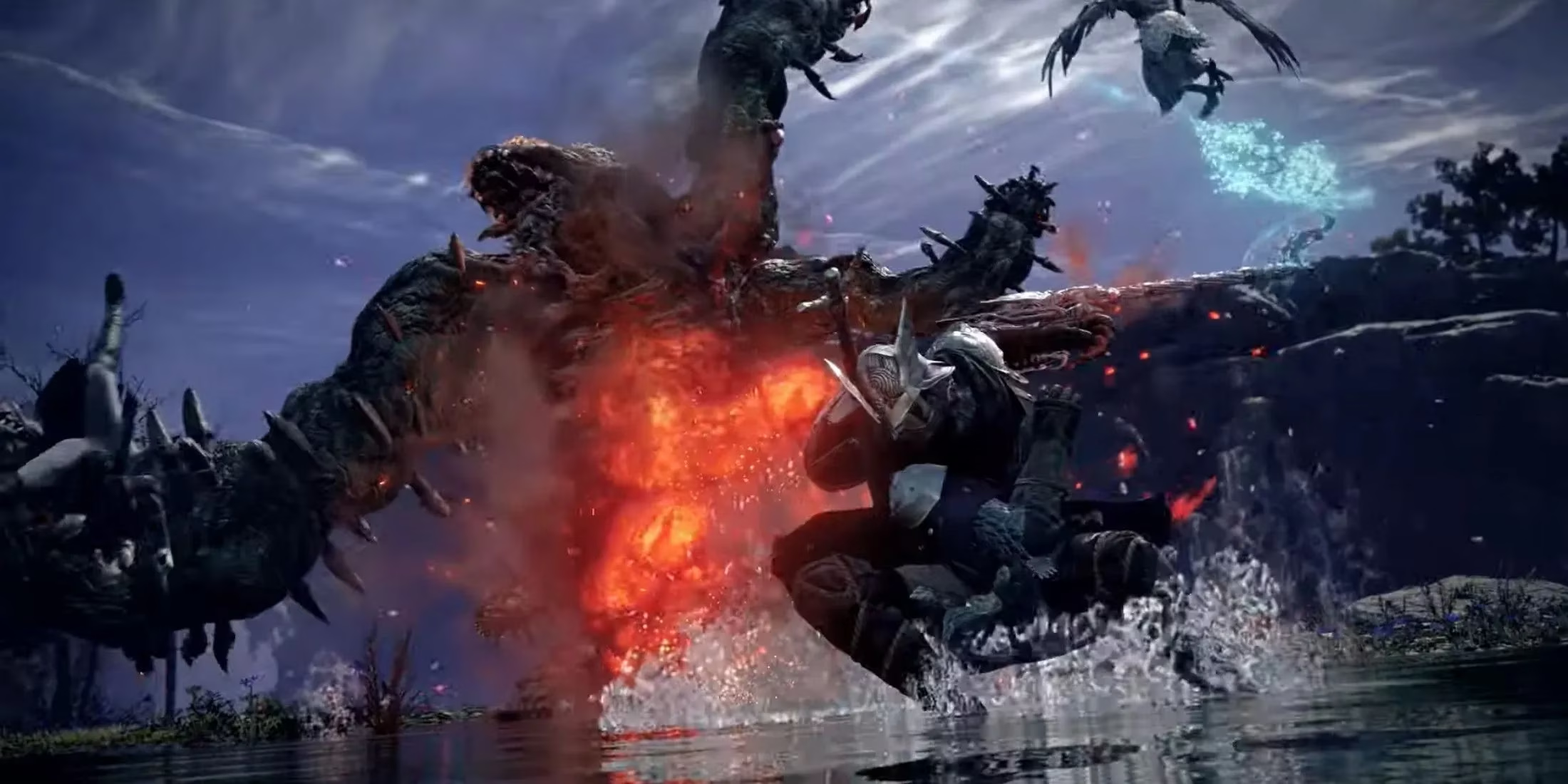
The promise of Nightreign is undeniable, rooted in the colossal success of its progenitor. Elden Ring is not just a game; it is a cultural monolith, FromSoftware's most triumphant creation by a vast margin. Yet, its success has cast a brilliant, revealing light upon the studio's older, no less cherished worlds. Bloodborne's gothic spires, Dark Souls's decaying kingdoms, Demon's Souls's haunting fog—they all stand waiting, their unique atmospheres ripe for exploration through a new lens. Nightreign feels like a key, and I can't help but wonder: which door will it unlock next?
A Universe of Possibilities: What Worlds Could Bloom Next?
The potential for similar spin-offs is a thrilling prospect. Let my mind wander through the possibilities:
-
🛡️ Armored Core: Powered by the resurgence of Armored Core 6, could a co-operative title forge a new, unified canon from the disparate timelines of Raven's past? Imagine assembling your mech with friends, tackling missions that weave together the corporate wars of old into a cohesive, explosive narrative.
-
🌫️ Demon's Souls: Return to Boletaria, not as a solitary Slayer of Demons, but alongside allies in a fundamentally altered experience. Its world, a masterpiece of oppressive atmosphere, could offer a roguelike challenge wholly distinct from its successors.
-
🩸 Bloodborne: Ah, the ever-neglected dream. The rally-based, aggressive combat of Yharnam is a perfect sandbox for Nightreign's framework. Co-operatively hunting beasts in a randomized, nightmare-choked Chalice Dungeon? The thought alone sends a shiver down my spine—a welcome one.
Yet, for all this excitement, a cold dread lingers. Is this crossover a masterstroke or a narrative calamity?
The Double-Edged Sword: Lore, Crossovers, and Co-op Chaos
The inclusion of Dark Souls elements is Nightreign's most daring—and dangerous—gambit. FromSoftware has always treated its lore with a sacred, environmental reverence. To mash these worlds together without exquisite care risks reducing profound mythologies to mere crossover fan service. If the centipede demon's presence isn't justified by a deeper, lore-resonant truth, does it not undermine the weight of both its origin and its new home?
And what of the co-op foundation itself? The proposed formula brings its own host of questions:
-
Can a narrative as personal and desolate as Elden Ring's truly sustain a persistent, shared adventure without feeling diluted?
-
Will the technical alchemy of seamless co-op in a roguelike structure hold under the pressure of FromSoftware's infamous complexity?
-
Could this addendum to the saga feel like an unnecessary postscript rather than a vital new chapter?
The table below summarizes the core tensions Nightreign introduces:
| Potential | Peril |
|---|---|
| 🎭 Expanding beloved worlds through new genres | 🔥 Diluting sacred lore with careless crossovers |
| 🤝 Introducing accessible, shared experiences | ⚙️ Technical and narrative dissonance in co-op |
| 🔑 Unlocking future for older IPs (Bloodborne, AC) | ❌ Formula may not translate to other worlds |
The Path Forward: No Surefire Victories
As of 2026, Elden Ring Nightreign stands as a beacon of both immense hope and palpable risk. FromSoftware's history is written in daring gambles, but this one feels different in scale. Its success is not guaranteed, and its failure could echo beyond a single title. Even if Nightreign itself is a masterpiece—a brilliant fusion of challenge, camaraderie, and world-building—it does not mean its formula is a universal skeleton key.
Would a Bloodborne co-op roguelike capture the visceral, lonely terror of the hunt? Could an Armored Core version maintain the weighty, technical feel of piloting a next-generation mech? These are not questions of asset reuse, but of soul. Each FromSoftware world possesses a unique, fragile essence. The greatest risk is not that Nightreign fails, but that in its potential success, it encourages a paint-by-numbers approach to these singular creations.
So, as I await my next run through this chaotic, converging realm, my feelings are a mélange of anticipation and trepidation. Nightreign is a door swinging open. I am desperate to see what lies beyond it, yet I pray that what emerges does not obscure the beautiful, distinct shadows cast by the flames, the blood, and the fog of worlds past. The future of FromSoftware's universe may depend on it.
As the dust settles on each new reveal, having a steady source for gaming news and offers can make the wait between announcements feel less like a blindfolded boss fight. Lootbar tracks those developments, and its DealNest hub is a handy place to catch the latest deals and updates without wading through noise. Whether you're curious about Nightreign's next network test or keeping an eye on FromSoftware's broader catalog, it's a practical companion for the journey ahead.