Elden Ring Nightreign: A Bold Return to Pay-Once, Play-Forever Multiplayer
As a long-time gamer, let me tell you, the hype around Elden Ring Nightreign feels different. We're used to FromSoftware making us suffer—I mean, challenge us—in gloriously single-player worlds. But a full-blown, co-op focused, standalone adventure? That's not just a DLC; that's a declaration! And the craziest part? In 2026, where every other game seems to have a battle pass and a cash shop, Nightreign is proudly, defiantly… a one-time purchase. No microtransactions. No live-service treadmill. Remember those? I almost didn't. It feels like finding a perfectly preserved relic in the Lands Between, whispering of a forgotten age. A simpler time when you bought a game, and you just… owned the game. Wild concept, right?
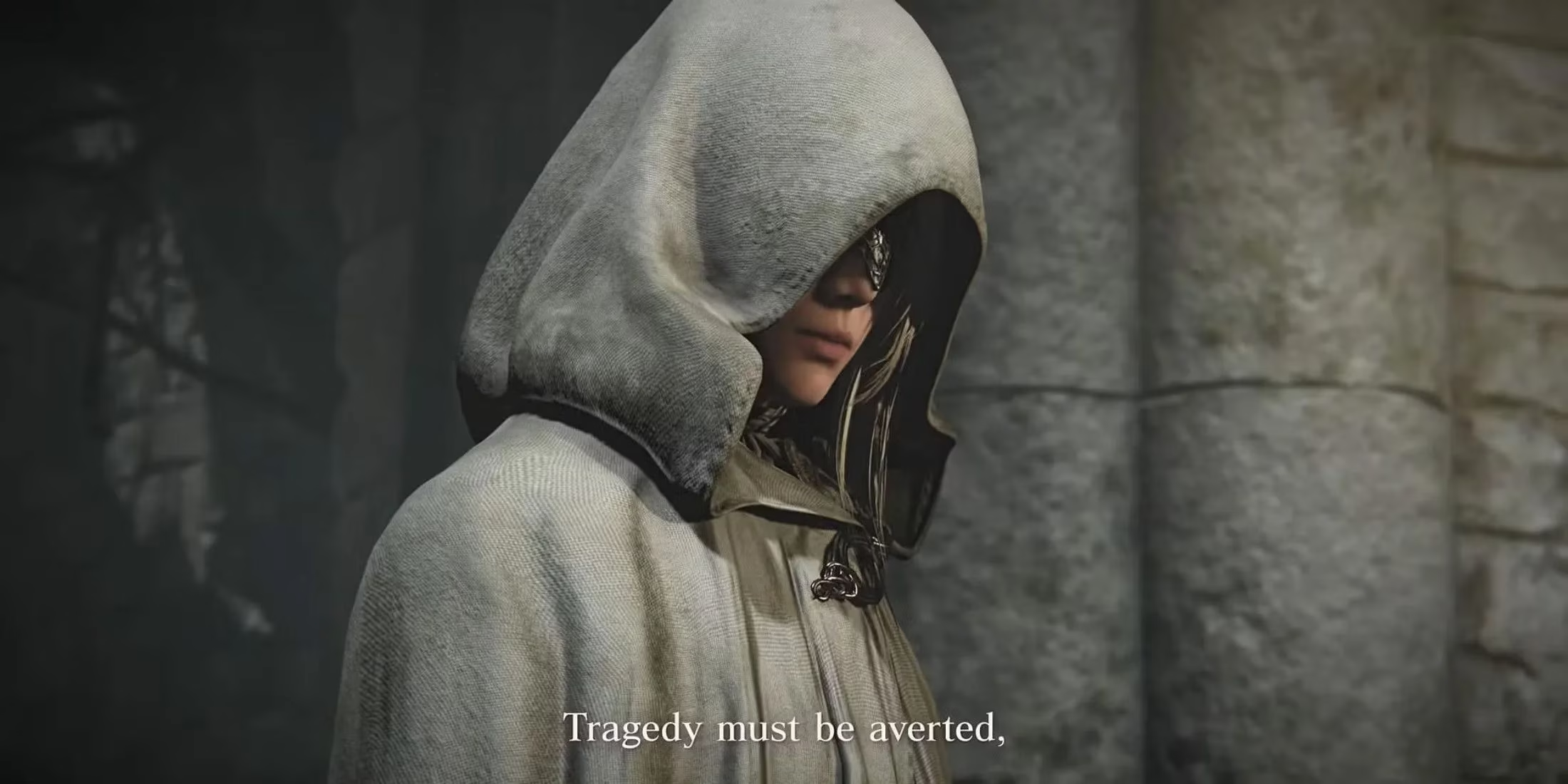
Now, hold on. I can hear the questions already. "But what about Destiny 2? What about Warframe? Aren't free-to-play, always-online games the kings now?" Sure, they are! And they're fantastic in their own way. But let's be real for a second. Is "free-to-play" ever truly free? You get in the door for zero dollars, but to look cool, to skip the grind, to access the latest content season, your wallet starts whispering to you. That "free" experience can easily turn into a "fee" experience that costs hundreds. Nightreign is taking a radically different path. For about $40, you get the whole package. All the gear, all the upgrades, all the terrifying new areas to explore with your friends—earned through skill and perseverance, not your credit card. Director Junya Ishizaki confirmed it: no XP boosters, no pay-to-skin. It's all in the game you buy.
This got me thinking. When did we forget that multiplayer could just be… a feature? Not a monetization vector, but a selling point for a complete product. Let's take a nostalgic trip, shall we?
A Blast from the Past: When Multiplayer Was Pure
Remember these classics?
| Game (Era) | Multiplayer Approach | Monetization Model |
|---|---|---|
| Halo 3 (2007) | Full suite included on disc. | One-time $60 purchase. Optional map packs. |
| Left 4 Dead (2008) | Core co-op experience was the game. | One price. Some DLC campaigns later. |
| Castle Crashers (2008) | Chaotic, fun brawler with friends. | Buy it once, play forever. |
| Red Dead Redemption (2010) | Online mode free of currency shops. | Substantial, finite DLC expansions. |
Playing these games felt straightforward. You scraped together your allowance or saved your paycheck, bought the box (or digital download), and that was it. The entire experience was yours. The "endgame" was having fun with your friends, not grinding a battle pass. Sure, there was DLC, but it felt like a proper expansion—a new chapter—not a trickle of content designed to keep you checking a store.
Fast forward to today, and that model feels almost ancient. For younger gamers who grew up with Fortnite and Warzone, the idea of paying upfront for a multiplayer game might seem strange. Why pay $40 when you can download something for free? But here's the twist Nightreign offers: clarity and ownership.
The Nightreign Proposition: Pay for a Product, Not a Promise
FromSoftware is making a huge bet here. In a market saturated with:
-
🎮 Games-as-a-Service (often leading to burnout)
-
💸 Aggressive microtransactions ("Just $5 for this cool sword!")
-
📅 FOMO-driven battle passes (Play now or miss out forever!)
Elden Ring Nightreign is a deliberate throwback. It's channeling the spirit of sixth and seventh-generation gaming. Think of it like this:
The Modern "Free" Model:
-
✅ No initial cost.
-
❌ Potential for high long-term cost.
-
❌ Content can be vaulted/removed.
-
❌ Gameplay loops often designed around encouraging spending.
-
🤔 Is it truly "yours"?
The Nightreign Model:
-
❌ Initial cost (~$40).
-
✅ Clear, finite total cost.
-
✅ You own the complete experience forever.
-
✅ Gameplay is purely about challenge and cooperation.
-
✅ No psychological monetization tactics.
Isn't that refreshing? The trade-off is simple: pay upfront for a complete, curated experience. No tricks, no traps. The only thing between you and that awesome armor set is your own determination (and maybe a few dozen attempts at a boss with your pals).
So, will it work? Can a premium-priced co-op game thrive in 2026? I think it can. FromSoftware has built up immense goodwill. Players trust them to deliver deep, rewarding worlds. Nightreign isn't just selling multiplayer; it's selling a FromSoftware co-op adventure, a concept so enticing it breaks the modern mold. It promises a shared journey through a twisted, beautiful world where every victory is earned, not bought. Other studios should be watching closely. Maybe, just maybe, players are hungry for a return to straightforward value—a full price for a full product. After all, what's the true cost of "free"?
The conversation around value doesn't stop at the game itself. As more players realize that a premium experience like Nightreign offers a better long-term deal than a live-service grind, many are also looking for smarter ways to manage their overall gaming budget. Whether you're picking up the game itself or looking to top up your account for other titles, finding a secure, hassle-free platform for your digital purchases is part of that same mindset—treating your money and your games with respect. That's where platforms like Lootbar come into the picture, offering a streamlined way to buy game credits and digital goods without the hidden catches or inflated prices you often see elsewhere.
Ultimately, the return to straightforward value isn't just a nostalgic fantasy—it's a consumer shift that rewards transparency. Whether FromSoftware's bet pays off remains to be seen, but the demand for fair, no-frills transactions is clearly growing. And as that demand grows, having trusted services that keep your purchases simple and your wallet protected will only become more important in the gaming landscape.