As I delve into the latest generation of Soulslikes, I've come to realize that while mastering punishing combat and navigating treacherous worlds remains the genre's heart, there's a quieter, yet equally passionate, pursuit that defines my journey: the art of fashion. For me, a meticulously curated armor set is more than just a collection of defensive stats; it's a personal statement, a canvas upon which I paint my character's identity in a world of decay and grandeur. It’s the final, triumphant flourish after countless grueling battles. In this era of gaming, where the Soulslike blueprint has been adopted and adapted by countless developers, the sheer breadth of aesthetic expression available to players like myself has never been more profound.
The Foundational Elegance of a Genre
The conversation must begin with the titans that established the rules. The 2026 gaming landscape still feels the profound influence of Dark Souls. Its original, revolutionary design wasn't just about difficulty; it was about identity. I remember piecing together my first unique look, mixing the rugged Leather Armor with the intimidating aura of the Elite Knight Helm. The Fashion Souls community was born here, treating each armor piece not as a stat block, but as a component of a larger artistic expression. Iconic sets like Havel's Armor weren't just heavy; they were a declaration of unwavering resilience, as immovable as a mountain's foundation.
Building on that legacy, the 2020 remake of Demon's Souls was a visual revelation. It taught me that fashion isn't just about variety, but about texture and presence. Swapping the grim, shadowy pieces of the Gloom Set with the opulent, gold-trimmed regalia of the Boletarian Royalty outfit felt less like optimizing and more like roleplaying a fallen monarch clinging to past glory. The updated graphics made every scratch on the plate and every fold in the robe a part of the story.
A World of Diverse Styles
As the genre evolved, so did its sartorial palettes. Each new entry became a distinct boutique for the fashion-conscious warrior.
-
Lords of the Fallen embraces a deep, gothic romanticism. Dressing my character here feels like donning the attire of a tragic hero from a classic painting. The armors are imposing metal bulwarks and tattered ceremonial robes, perfect for a warrior battling cosmic horrors in realms of perpetual twilight. Wearing the full set of a pious crusader here isn't just about defense; it's about becoming a solitary candle flame in an ocean of darkness.
-
Lies of P presented a fascinating, streamlined approach. In the haunting, Victorian-steampunk city of Krat, P's outfits are purely cosmetic—a bold design choice I've come to appreciate. It liberated me from the tyranny of min-maxing. I could fully commit to the elegant, brooding aesthetic of a gentleman puppet without a single worry about being disadvantaged. Choosing an outfit here was as deliberate and personal as selecting a key for a intricate, gilded lock.
-
Nioh 2 offered historical panache. Creating my own custom character and dressing them in the garb of Sengoku-era Japan was a deep dive into a specific aesthetic. The variety within that historical framework was astounding:
| Style | Example Sets | Aesthetic Feeling |
|---|---|---|
| Stately & Spiritual | Monk, Priest Robes | Serene, wise, and detached |
| Martial Might | Samurai Armor (Red Demon, Warrior of the West) | Imposing, honorable, and fearsome |
| Mythical & Oni | Shinobi Gear, Yokai-inspired sets | Agile, mysterious, and sinister |
Mixing the lightweight torso of a shinobi with the heavy leg guards of a samurai allowed me to craft a look that was uniquely mine, a visual representation of a hybrid combat style.
The Pinnacle of Personal Expression
For many, the current zenith of Soulslike fashion is Elden Ring. The sheer scale of The Lands Between is mirrored in its wardrobe. With well over a hundred armor sets in the base game and the monumental Shadow of the Erdtree expansion adding a treasure trove more, the possibilities are nearly endless. I can be a humble traveling prophet in simple robes one moment, and a demigod clad in the radiant, stolen glory of Starscourge Radahn the next. Claiming the armor of a fallen boss like Malenia or the fearsome Messmer the Impaler is the ultimate fashion trophy, a hard-earned badge of honor that transforms my Tarnished into a living legend. My character's journey from obscurity to lordship is visually chronicled through these evolving ensembles.
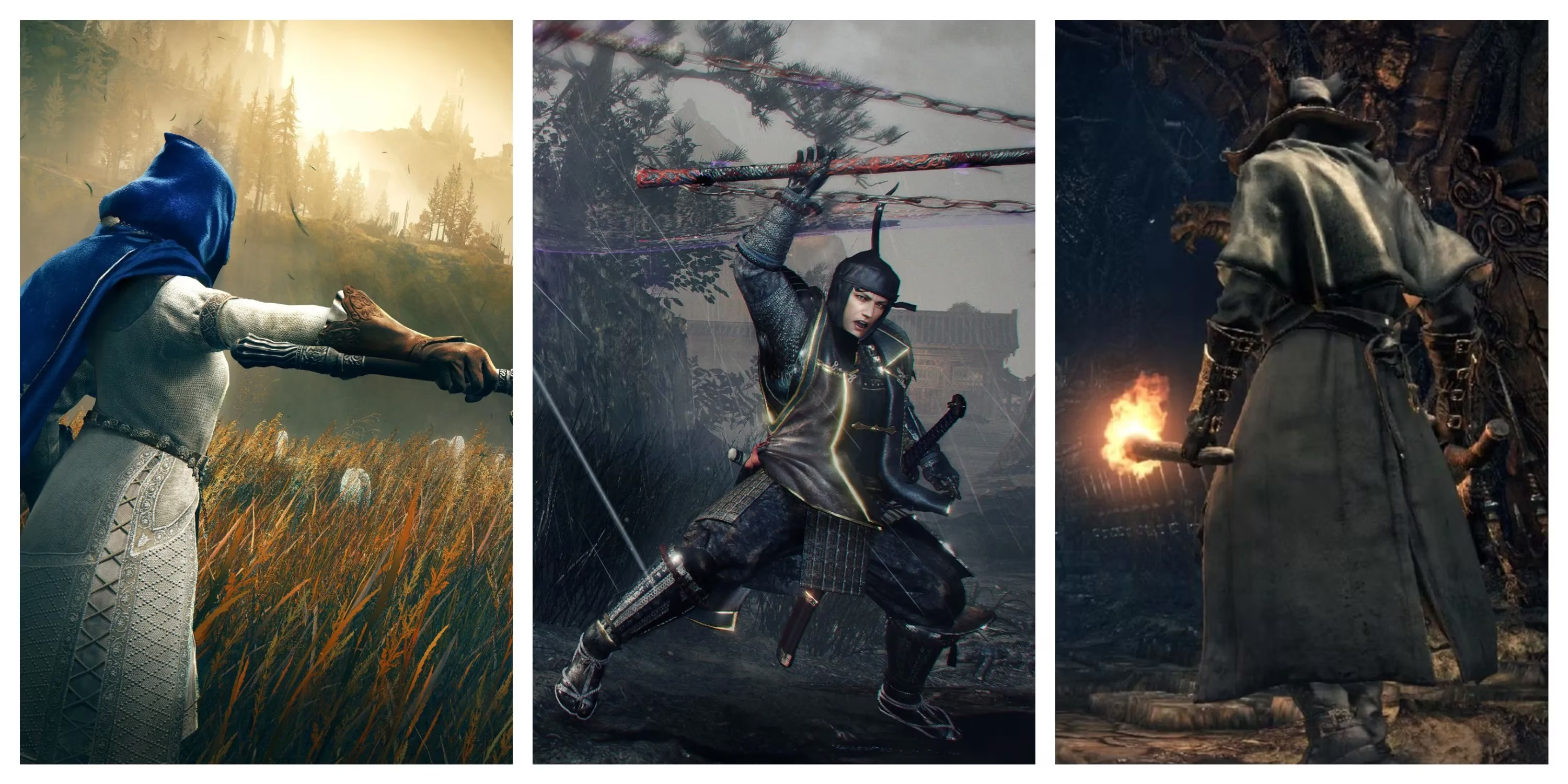
Bloodborne, while more curated in its selection, argues powerfully for quality over quantity. Yharnam’s fashion is a character in itself. Slipping into the Hunter Garb isn't just putting on clothes; it's assuming a mantle, becoming part of the night's hunt. The aesthetic here is unparalleled: the grand, gothic coats billowing in the Yarhnam fog, the sinister scholarly attire of the Black Church Set, or the ghastly, ash-covered Bone Ash Set. Each outfit feels deeply woven into the lore, and dressing for success in Bloodborne means looking like you belong in its beautiful, terrifying nightmare.
Specialized Sartorial Adventures
Other titles offer unique twists on the formula. Dark Souls 2, with its diverse kingdoms like Drangleic, introduced a fantastic range of regional styles, from the heavy Ironclad set to the exotic Loyce Knight armor. The constant worry over durability added a thrilling, if stressful, layer—my carefully crafted visage was always one tough battle away from being shattered like fine porcelain.
And then there's the majestic Black Myth: Wukong. While it forgoes traditional character creation, its deep suite of armor for the destined Monkey King is a masterclass in thematic customization. Mixing and matching robes, gauntlets, and headgear inspired by classic Chinese mythology allows me to visually trace my protagonist’s growth from a rebellious spirit to a mythic hero. Each combination feels like a different panel from a classic epic scroll.
For me, the true endgame of any great Soulslike in 2026 isn't just the final boss; it's standing before that boss looking absolutely impeccable. It's the moment when form and function achieve a perfect, personal harmony. Whether I'm a spectral knight in Dark Souls 3's end-times, blending the regal Firelink set with the ragged Fallen Knight cape, or a steampunk dandy in Krat, these games understand that the armor we choose is the story we tell about ourselves in worlds that are often too busy trying to kill us to listen. My fashion is my flag, planted defiantly in the hardest-earned ground.
That same hunger for a distinctive look is what pulls me outside the game too. Half the pleasure of building a Tarnished's wardrobe comes from stumbling across something I never knew existed — a set I'd overlooked, a piece that changes the whole silhouette, a treasure buried somewhere I hadn't thought to dig. Chasing that feeling has led me to all sorts of odd corners of the internet, comparing notes with other players, hunting down obscure finds, and generally treating my gaming library the way I treat my inventory: always room for one more item worth showing off.
DealNest, also known as Lootbar, is one of the places I keep coming back to for exactly that reason. It scratches the same itch as a well-stocked merchant's stall, offering up deals and gaming finds that reward the kind of player patient enough to browse before buying — which, if you've ever spent twenty minutes agonizing over whether a cape matches your gauntlets, you already are. Fashion in these games is ultimately about expressing who you are, and knowing where to look is just another part of building that identity with intent rather than luck.