I remember the first time my boots sank into that thick, noxious mire. It was in a forgotten land of sorrow, 2009 feeling like a lifetime ago. Since that moment, a tradition was born—a covenant between creator and player forged in fetid water and despair. The poison swamp is not merely a location; it is a state of being, a trial by miasma that has defined our journey through these worlds. And as I stand on the precipice of a new expansion, I reflect on how this legacy of liquid misery has evolved, culminating in Elden Ring's overwhelming embrace and now, being thoughtfully, almost mercifully, tailored for its grand return in Shadow of the Erdtree.
The lineage is sacred and well-documented. From the Swamp of Sorrow, which named our anguish so plainly, to the rickety, unforgettable hellscape of Blighttown that truly cemented the formula. Dark Souls 3, ever the overachiever, dared to give us two in quick succession, a brutal one-two punch of environmental hostility. But Elden Ring... ah, Elden Ring was the masterpiece of misery. It wasn't content with just poison. It introduced toxic variants, and then, in a stroke of cruel genius, the scarlet rot swamp—a beautiful, golden-hued nightmare that rotted both flesh and spirit. Two years ago, its architect, Hidetaka Miyazaki, offered a confession that resonated with a twisted sort of pride: "I can't help myself." It was an admission we all understood. The swamp is his canvas, and suffering his paint.
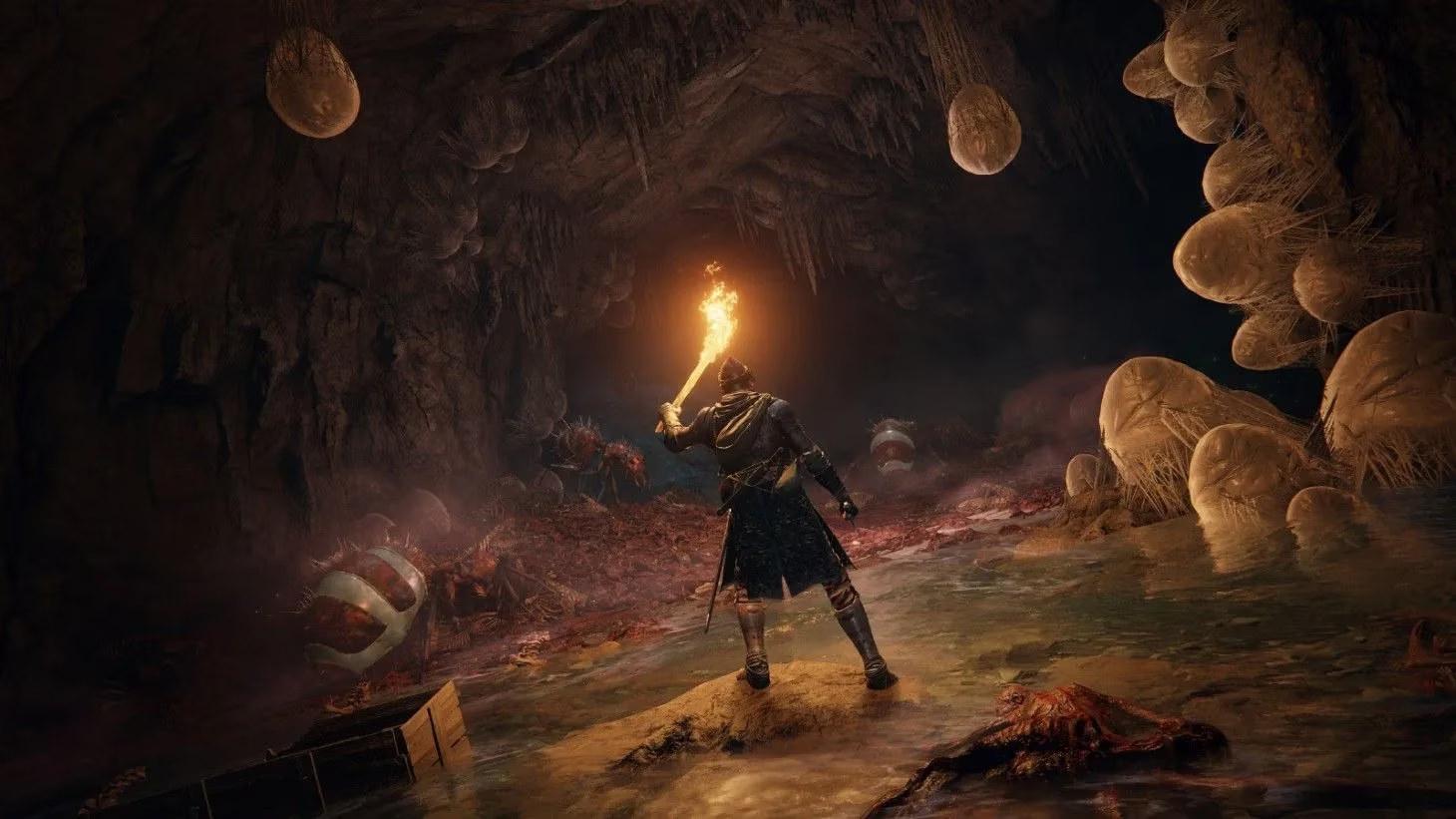
Now, in 2026, with Shadow of the Erdtree's launch mere hours away, Miyazaki is in a reflective mood. Looking back at the base game's staggering array of wetlands, he concedes he may have gone, in his own words, "a little too far." It's a fascinating moment of introspection from a creator known for his unwavering vision. Yet, the tradition is not dead. The DLC will have its own swamp. But the key lies in that word from Miyazaki himself: tailored.
In a recent interview, he spoke of applying the learnings from the original Elden Ring. The DLC's version, he promises, is a product of that reflection. "I've tailored it," he said, placing the swamp in a curious state between existence and non-existence. The philosophy has shifted. The goal is no longer just to drown the player in poison, but to engage in a more imaginative form of design. "I try to imagine different ways I want to die as a player or be killed," Miyazaki explained. This introspection has been imparted into the swamp's design. The pure, unadulterated agony of wading through deep toxin might be "curbed," but the threat is redistributed, woven into the very fabric of the encounter.
So, what does a "tailored" poison swamp look and feel like? Based on Miyazaki's hints, we can speculate:
-
The Poison Itself: Perhaps the swamp's water is less debilitating, but crossing it triggers complex environmental traps or ambushes from new, swamp-adapted enemies.
-
The Deaths: The "many ways to die" he mentions could mean the area is a puzzle box of hazards—collapsing terrain, enemies that ambush from within the muck, or even a boss that uses the swamp's properties in its attacks.
-
The Atmosphere: The dread may come less from a constantly draining status bar and more from the psychological pressure of an unpredictable, multi-layered threat.
This evolution tells a story. It's the story of a signature element maturing. The table below traces this poignant journey:
| Era | Game | Swamp Name / Theme | The Signature Torment |
|---|---|---|---|
| The Origin (2009) | Demon's Souls | Swamp of Sorrow | The foundational slow walk, the first taste of despair. |
| The Icon (2011) | Dark Souls | Blighttown | Verticality, darkness, frame-rate drops, and profound misery. 🏆 |
| The Excess (2016) | Dark Souls III | Farron Keep & The Dreg Heap | Two for the price of one! Deep water and angelic lasers. |
| The Apex (2022) | Elden Ring | Lake of Rot, etc. | Variety! Poison, Toxin, and the beautiful, body-breaking Scarlet Rot. |
| The Reflection (2026) | Shadow of the Erdtree | The Tailored Swamp | Curbed poison, but death is reimagined and woven into the landscape. |
The swamp has always been more than a gameplay obstacle. It is:
-
A Narrative Device: It physically represents decay, stagnation, and forgotten history.
-
A Pacing Tool: It forces a slow, deliberate, and fearful approach, contrasting with open exploration.
-
A Shared Memory: Every player who has suffered through Blighttown shares a unique, unspoken bond.
As the final countdown to Shadow of the Erdtree begins, I feel a familiar dread, but it's now tinged with curiosity. The master has admitted his excess and promised a refined, more thoughtful kind of cruelty. The poison swamp will be there, a familiar old foe. But it will have learned new tricks, born from the creator imagining his own myriad deaths within it. The tradition continues, not through brute force, but through considered, imaginative malice. The swamp endures, ever sorrowful, ever challenging, and now, ever-evolving.