My journey through the Altus Plateau in Elden Ring has introduced me to many unsettling places, but few were as memorably strange as the Windmill Village. Nestled in the northeastern part of the plateau, this location initially presents a scene of joyous celebration, a stark and deceptive contrast to the pervasive gloom of the Lands Between. The dancing inhabitants and vibrant colors create an almost festive atmosphere, but seasoned Tarnished know that in this world, such tranquility is often a prelude to hidden horrors. Having visited this eerie hamlet myself, I can understand why many players draw comparisons to certain unsettling films; the cheerful facade masks a dark and violent secret, making it one of the most uniquely haunting side locations in the entire game.
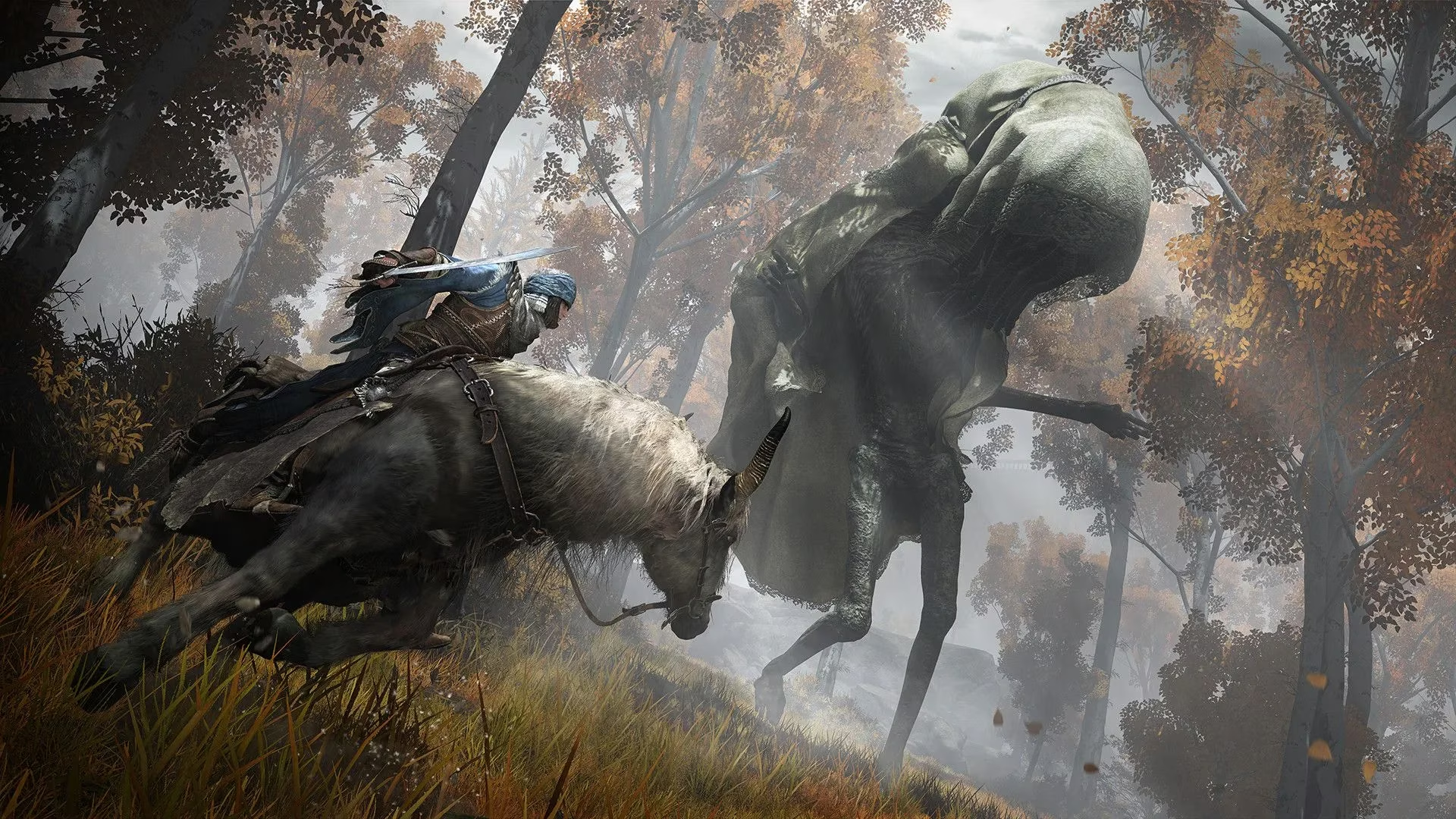
Reaching this peculiar village requires traversing the Altus Plateau. My path began after activating the Grand Lift of Dectus, a monumental ascent that grants access to this new region. From the first Site of Grace you encounter upon arriving on the plateau, the route to Windmill Village is a circuitous one. You'll need to head generally eastward, then curve north, and finally travel west to reach the northernmost cliffs of the Altus Plateau. The landscape here is treacherous, dotted with enemies and perilous drops, so vigilance is key. Following this winding path eventually leads you to the village, perched ominously on a hillside, its windmills spinning lazily against the sky. The journey itself feels like a pilgrimage to a place forgotten by time, or perhaps willingly ignored.
What awaits inside is a surreal experience. Upon entering the village proper, you are not immediately set upon. Instead, you are an observer to a bizarre celebration. The NPCs, adorned in simple garments, are caught in a perpetual state of dance, twirling and swaying with abandon. They pay you no mind, completely absorbed in their revelry. This creates a profoundly uncanny feeling. You are a heavily armed intruder in a place of peace, and the dissonance is palpable. However, this fragile peace is incredibly thin. From my own experience, the moment a village dog catches your scent, the entire mood shatters. The dancing figures instantly halt, their cheerful expressions twisting into hostility, and they will attack without mercy. It's a sudden, violent shift that perfectly encapsulates the game's theme of fragile illusions.
 The true purpose of braving this strange locale awaits at its summit: a formidable boss encounter. Ascending past the windmills and hostile villagers leads you to a circular arena where the Godskin Apostle awaits. This boss is no mere obstacle; it is a test of skill and patience. The fight unfolds in two distinct phases, each more demanding than the last.
-
Phase One: The Apostle is aggressive and swift, utilizing a long-reaching weapon with a mix of slashes and thrusts. His movements are deceptively fast for his size.
-
Phase Two: Upon losing enough health, the boss's moveset expands dramatically. He gains powerful black flame incantations and his attacks become even more relentless.
A particularly cruel trick this boss employs is punishing your healing attempts. If you try to drink from your Flask of Crimson Tears at the wrong moment, he will often respond with a quick, long-range magic attack, making timing and positioning absolutely critical. Defeating him is a tough but rewarding challenge, granting access to his unique armor set and weapon.
Windmill Village stands as a brilliant piece of environmental storytelling. It's a location that doesn't need lengthy exposition to feel significant. The sequence of events—the peaceful approach, the eerie non-aggression, the sudden violence from the villagers, and the climactic battle with a deadly apostle—creates a self-contained narrative that is both disturbing and fascinating. It reminds me that the Lands Between is a world where beauty and horror are intimately intertwined, and that some celebrations are best observed from a distance, if at all. For any Tarnished seeking to fully understand the depth of this broken world, a visit to the dancing village on the hill is an essential, if unsettling, pilgrimage.