Ah, the Soulsborne games. A delightful cocktail of exquisite pain, breathtaking vistas, and bosses that make you question your life choices. But what truly elevates these masochistic masterpieces from solitary suffering to shared, glorious agony? That's right, it's the jolly cooperation! While we all love a good solo challenge, there's something magical about summoning a friend, a stranger, or even three idiots in mismatched armor to help you bash a demigod's skull in. But not all co-op experiences are created equal. From the frustrating waiting rooms of Yharnam to the seamless(ish) fields of the Lands Between, how do they stack up over a decade and a half of evolution? Let's dive in and rank these cooperative catastrophes and triumphs.
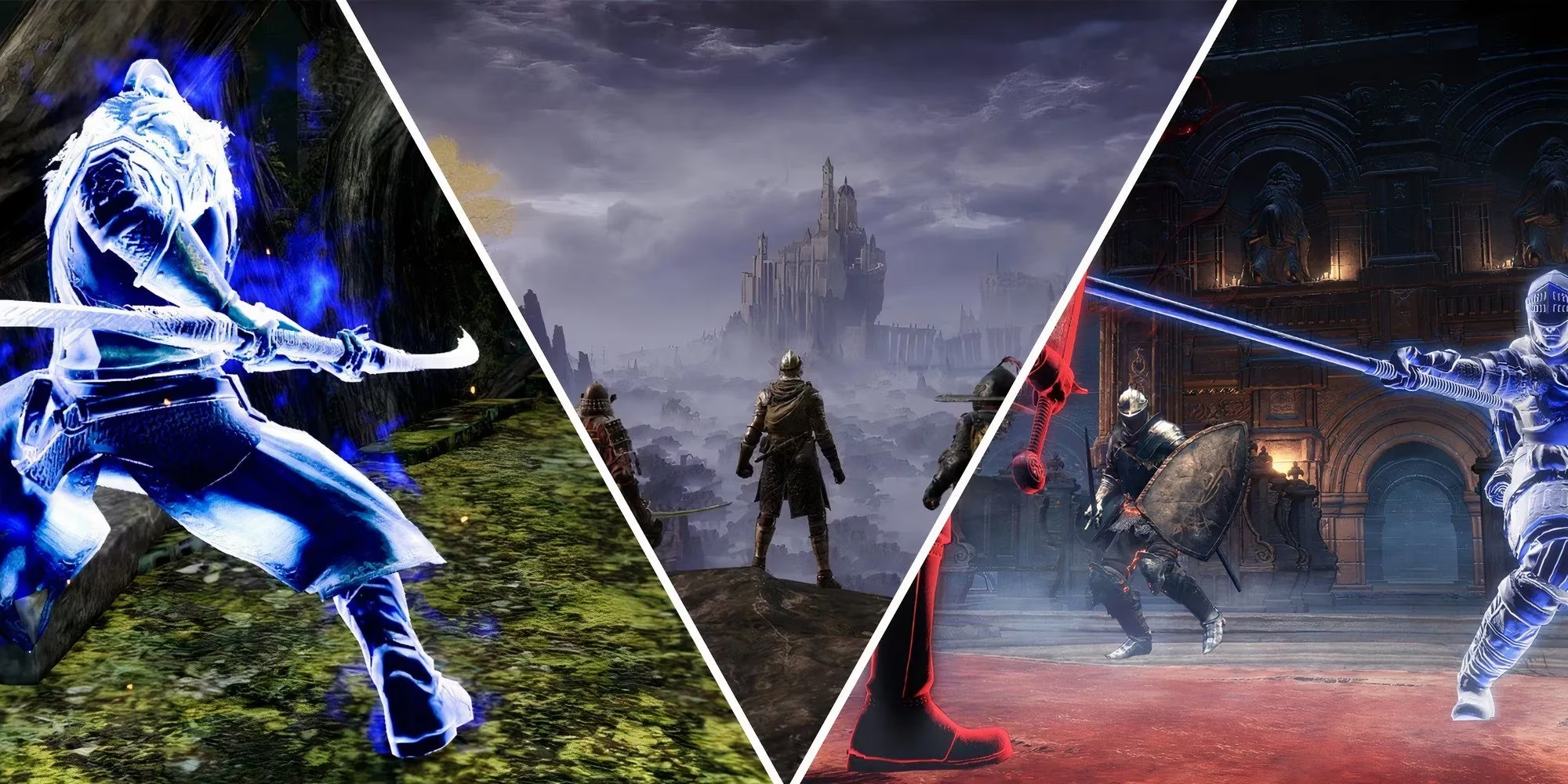
6. Bloodborne: The Eternal Waiting Simulator
Wait, isn't Bloodborne often hailed as FromSoftware's magnum opus? The gothic horror, the trick weapons, the lore that requires a PhD to decipher? Absolutely! But its co-op? Oh, dear hunter, that's a different beast altogether. Remember the thrill of placing a summon sign? Bloodborne said, "Nah, let's use bells." Sounds atmospheric, right? In practice, it was like trying to find a specific grain of sand on a beach while wearing oven mitts. The act of simply connecting with another player became an unintuitive chore.
The central problem wasn't the idea, but the execution—or rather, the ability to execute anything. Players could wait for what felt like actual hours in a spectral waiting room, praying the chime of a Beckoning Bell would finally bring aid. Was it a clever narrative device reflecting the dreamlike, lonely state of Yharnam? Perhaps. Was it fun? Not particularly. It emphasized a lack of accessibility so severe that most hunters just learned to git gud alone. A masterpiece in single-player, but in co-op? It was more of a... solo masterpiece with optional, frustrating multiplayer DLC.
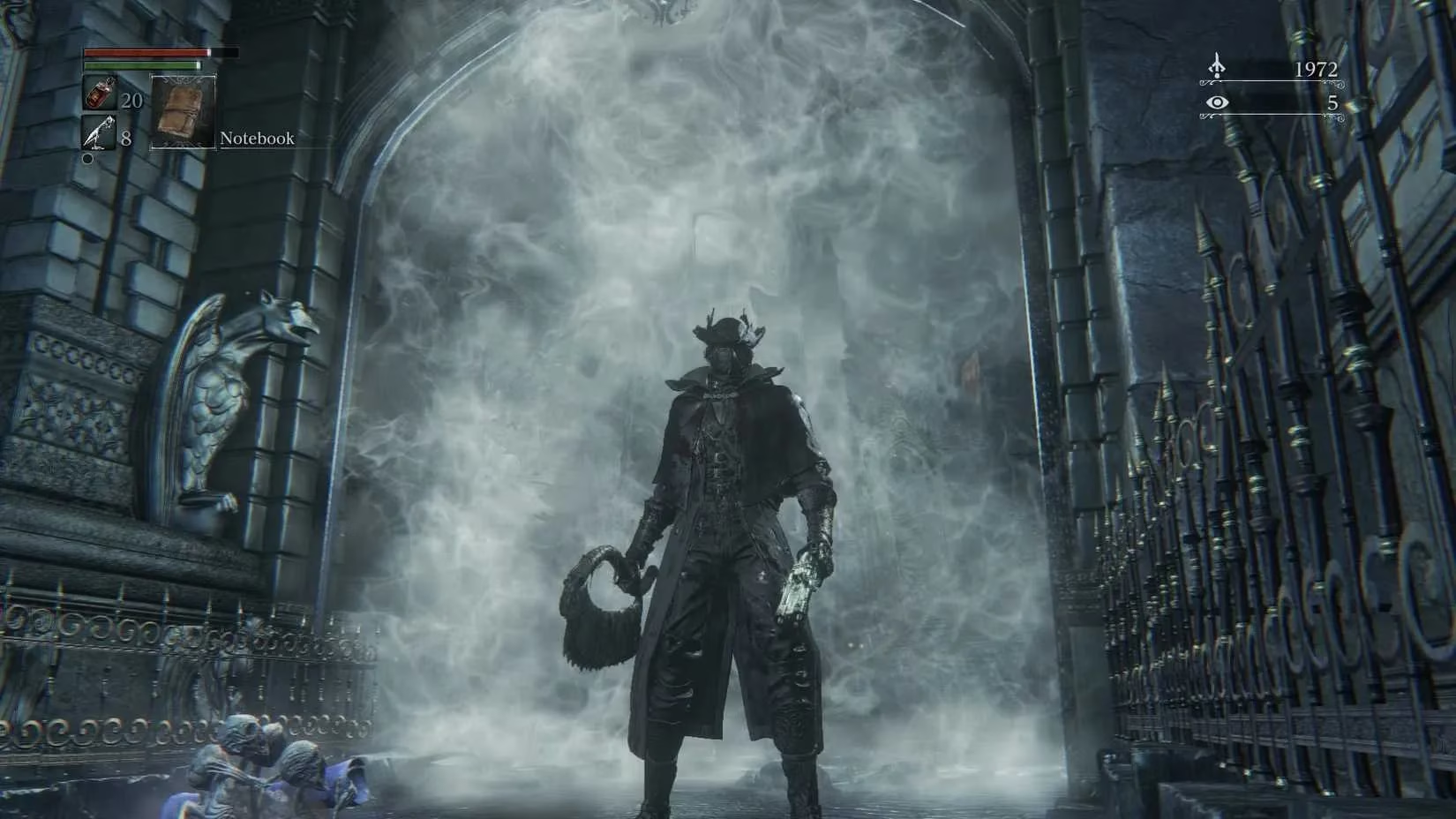
5. Demon's Souls: The Rough Blueprint
We must pay respects to the granddaddy, the progenitor, the one who started it all. Demon's Souls laid the philosophical and mechanical foundations for everything that followed. Its online system was innovative for its time, creating those unforgettable moments of unexpected aid or terrifying invasion. But let's be honest, in 2026, looking back? It was about as polished as a jagged piece of Archstone.
The overall functionality was, to put it kindly, obscure. Want to help a friend? You might need to die first in your own world. The balancing was... experimental. And the matchmaking? What matchmaking? You were just as likely to get summoned by a random person on the other side of the world as you were by your actual buddy sitting next to you. The 2020 remake smoothed over many rough edges, but the original's flawed basics—while revolutionary—still tainted the experience. It was a promising, glorious mess.
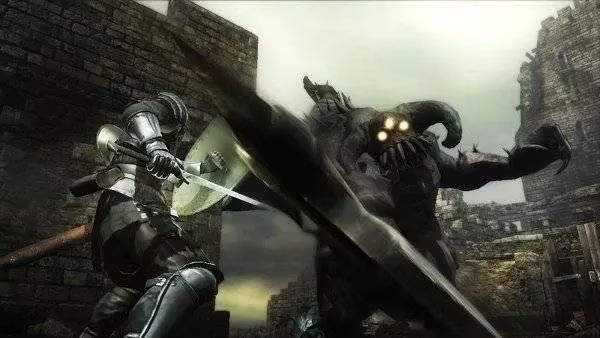
4. Dark Souls: The Covenant Revolution
Here's where things got serious. Dark Souls didn't just iterate on Demon's Souls; it evolved it. The co-op features received a massive upgrade, introducing a system that would become iconic: Covenants. Suddenly, multiplayer wasn't just about summoning help; it had narrative depth and gameplay consequences. Were you a sunbro seeking jolly cooperation? A Blade of the Darkmoon dispensing justice? The interactions felt more natural and meaningful, directly contributing to the game's legendary status.
It also implemented password summoning (a godsend for playing with friends) and offered tangible rewards for online play. Was it perfect? Of course not. Connectivity could still be finicky, and the summon sign system, while improved, had its quirks. But it established an exceptional framework. It was the moment co-op stopped being a neat trick and started becoming a core, beloved pillar of the Souls experience.
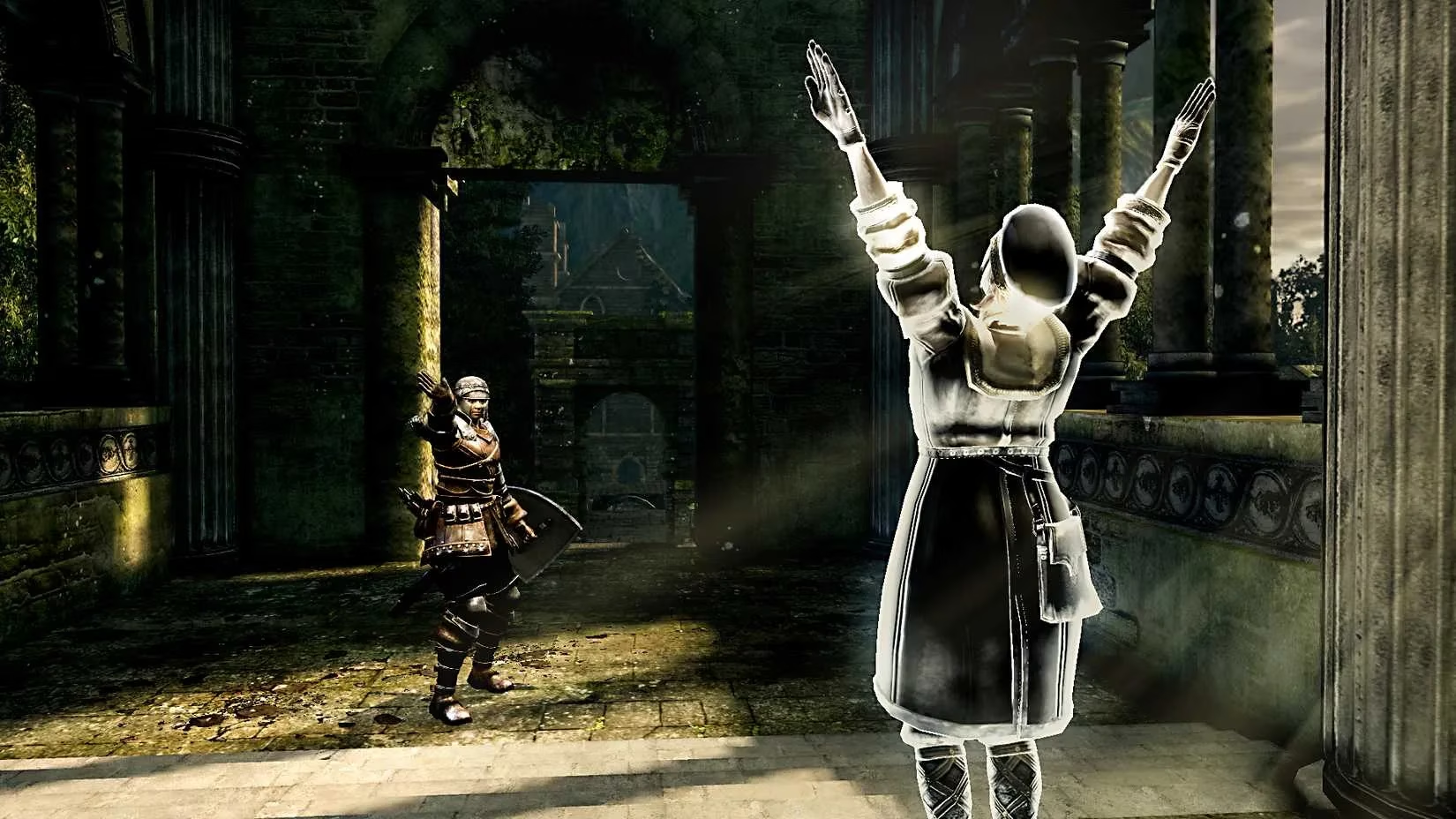
3. Elden Ring: The Vast, (Mostly) Refined Adventure
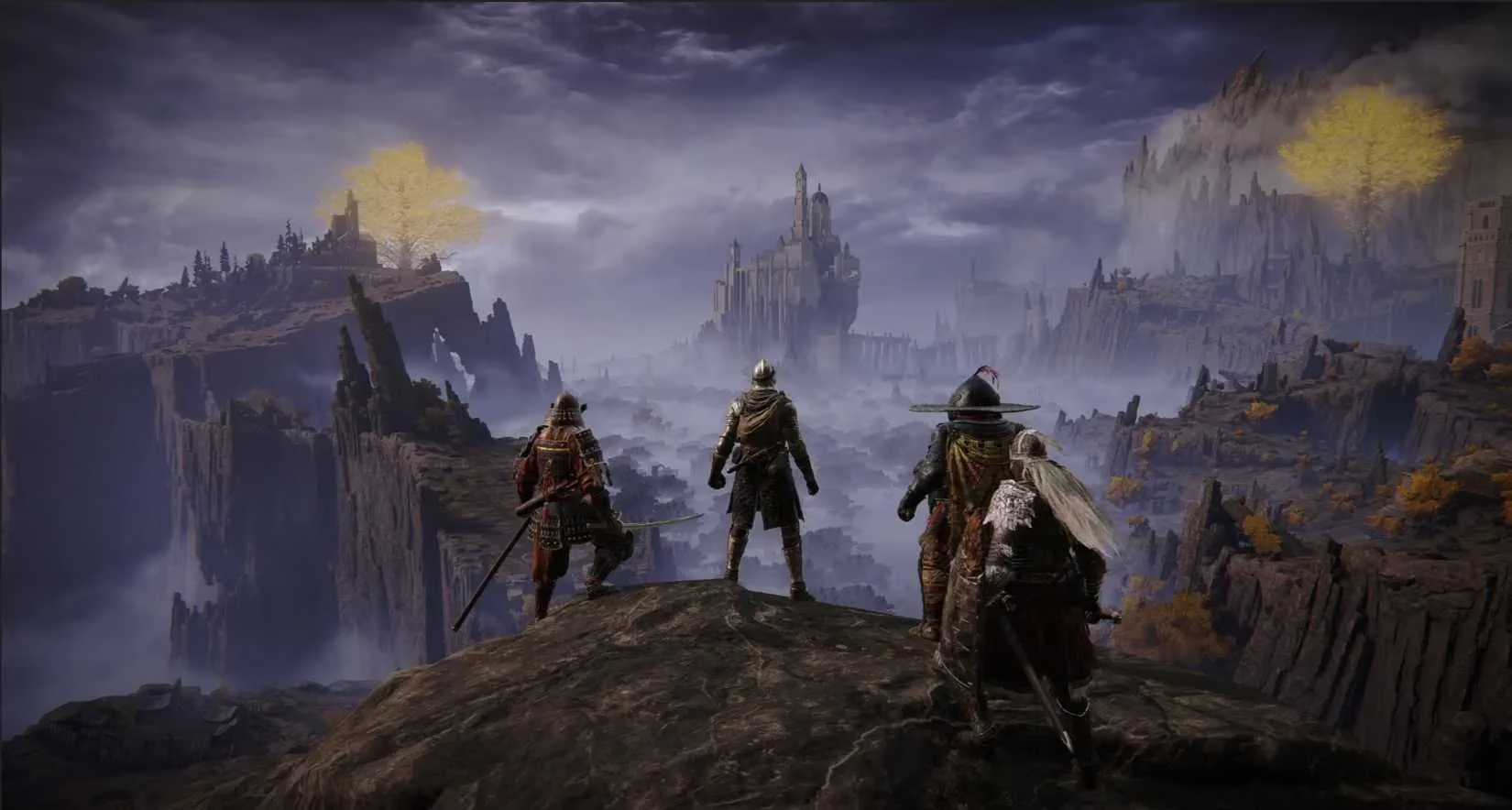
As the newest kid on the block (well, as of 2026, it's a few years old but still the latest mainline title), Elden Ring benefits from over a decade of FromSoftware's online trial and error. Its multiplayer system is the most curated and stable of the bunch. Want to explore the vast Lands Between with two friends? You can! The process is relatively straightforward, and the net code is generally reliable.
But... and there's always a 'but' in Lordran, Lothric, or the Lands Between. Why are we restricted to specific areas per summon? Why can't we gallop across the plains on our spectral steeds together? And why, oh why, is the player limit still a conservative four? These are the unfortunate quirks that hold it back from the top spot. However, there's no denying that many of its brutal encounters and sprawling legacy dungeons feel designed with co-op in mind. Fighting Malenia with a squad might feel like cheating to some, but to others, it's the refined cooperative adventure they've dreamed of since 2009.
2. Dark Souls 3: The Polished Climax
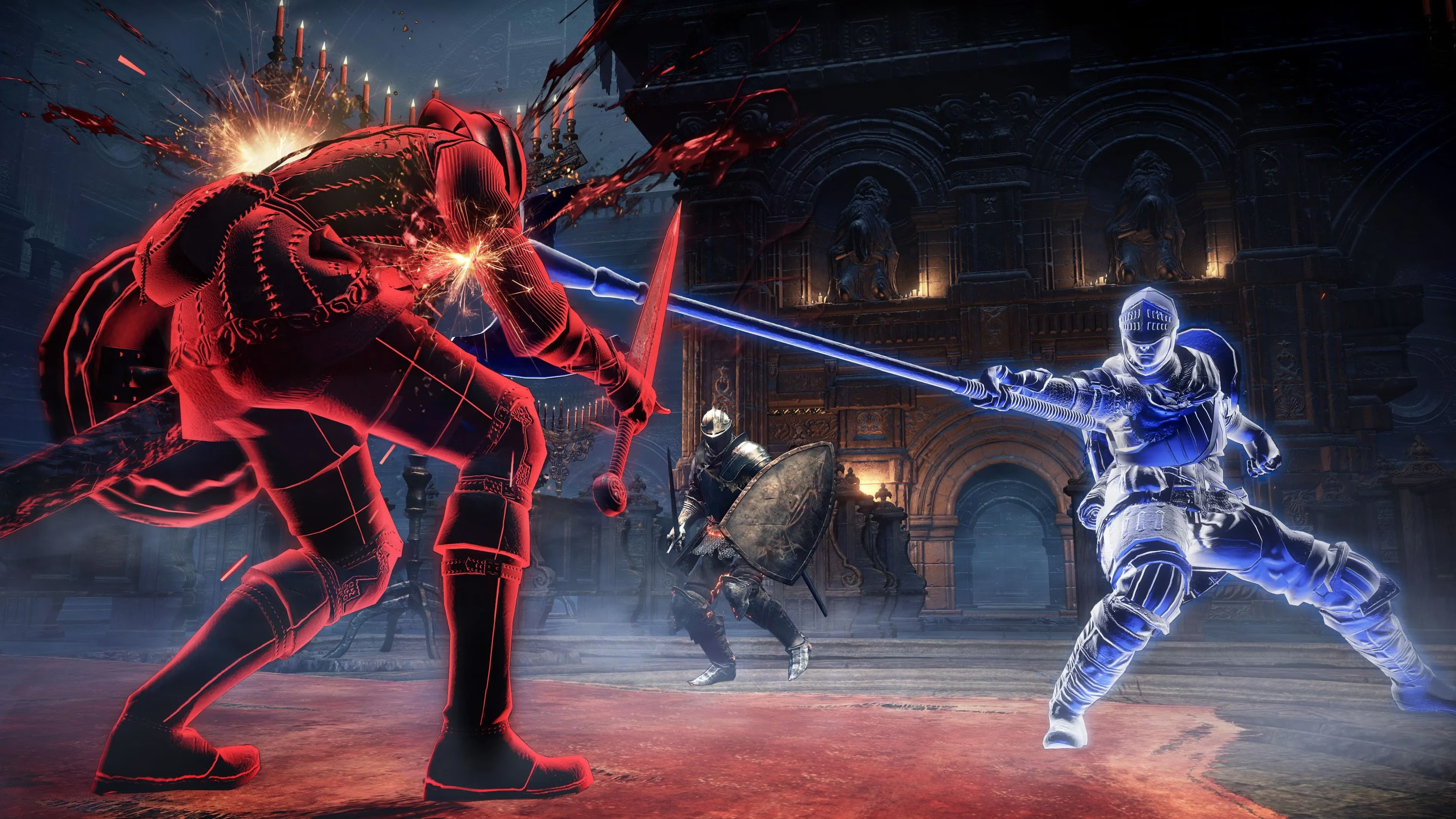
If Dark Souls built the cathedral of co-op, Dark Souls 3 installed the golden plumbing, the stained-glass windows, and the perfectly tuned pipe organ. This is the culmination of the trilogy's relentless pursuit of refinement. After learning from the missteps of Bloodborne and honing the systems of its predecessors, Dark Souls 3 delivers a multiplayer experience that is remarkably solid on every front.
Let's break it down:
-
Covenants? Varied, fun, and integrated.
-
Connectivity? Consistently good.
-
Accessibility? Summon signs are clear, passwords work well.
-
Fun Factor? Through the roof, especially in the chaotic boss fights.
It's practically flawless from a technical and design standpoint. For many, this is the definitive co-op Souls experience. It's reliable, deep, and incredibly fun. So why isn't it number one? Well, sometimes pure, polished perfection lacks a certain... charming madness.
1. Dark Souls 2: The Co-op Carry
Hold on, put down your Estus Flask! I can hear the cries of heresy from here. Dark Souls 2 at number one? For co-op? Absolutely, and here's the controversial truth: Dark Souls 2 is the only game on this list that needed its co-op to survive. Its reputation for odd hitboxes, adaptability stats, and enemy ambushes is... let's say, "earned." But FromSoftware, in their infinite wisdom (or perhaps mischief), seemed to know this.
They designed the entire game around the assumption you'd have friends. Crowded mobs? Bring a buddy. Boss with two health bars? Bring two buddies! Entire DLC areas that feel like raids? You get the idea. The game's design screamed for cooperation more than any other entry.
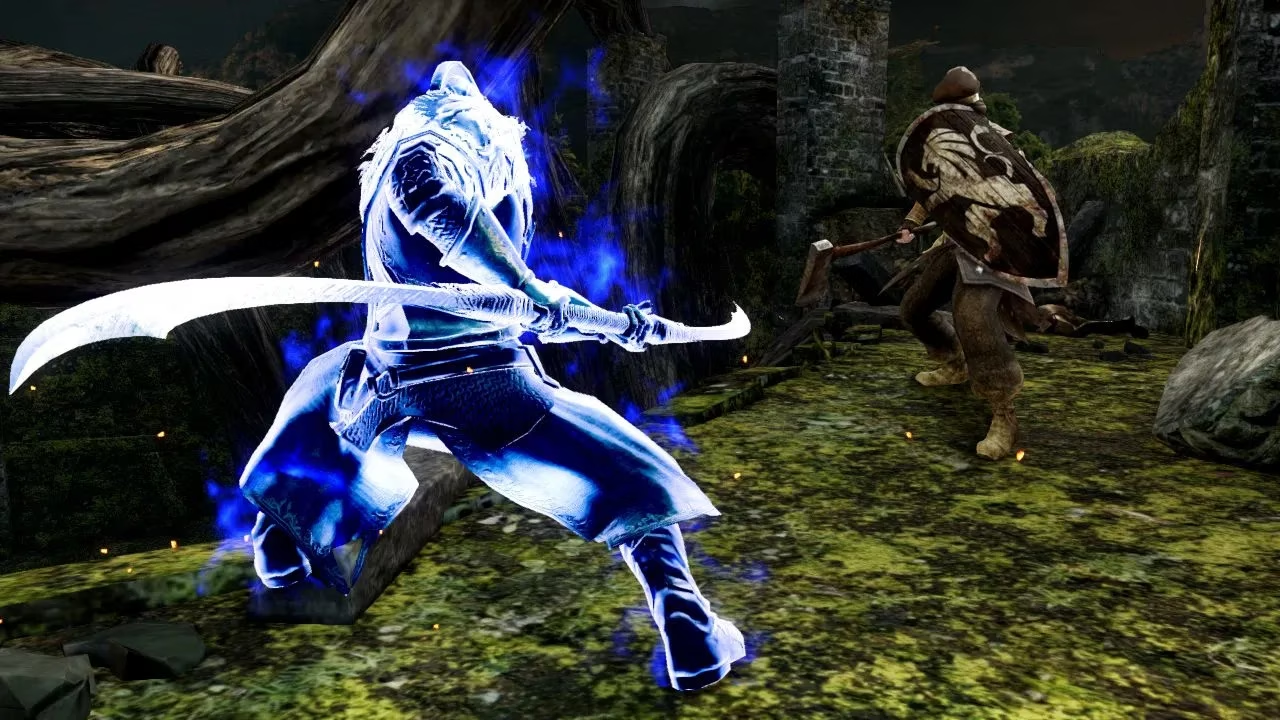
The Covenants were enhanced, the servers were (mostly) reliable, and the connectivity was top-notch for its time. The community didn't just use co-op; they embraced it as the primary way to endure and even enjoy the game's idiosyncrasies. Dark Souls 2 became dependent on its co-op, and in doing so, it mastered it. It wasn't just a feature; it was the lifeblood of the experience. It may not be the most polished, but it is the most essential and passionately designed co-op experience in the Soulsborne pantheon. For that, it earns the crown—a crown held aloft by four players simultaneously beating a gank squad into the ground.
So there you have it, a journey through fire, friendship, and frequent disconnections. Whether you're a sun-praising cooperator or a sinister invader, these games have given us memories of shared struggle and victory that are as enduring as the cycles of flame themselves. Now, who's up for helping me with the Ornstein and Smough of 2026? I hear they've added a third one this time... 😨